There is no national go karting age limit India rule, and any page that gives you one number is guessing. Karting in India is regulated venue by venue, so the minimum age is whatever the circuit you are calling has decided for the karts it runs. That is why one track will take a twelve-year-old and the next asks for fourteen, and why the height question usually matters more than the birthday.
This page explains what the limit is actually built on, why F9 does not publish a single figure, what to ask before you book a child, and what a family can do when one member of the group falls below the line.
Go karting age limit India: why there is no single number
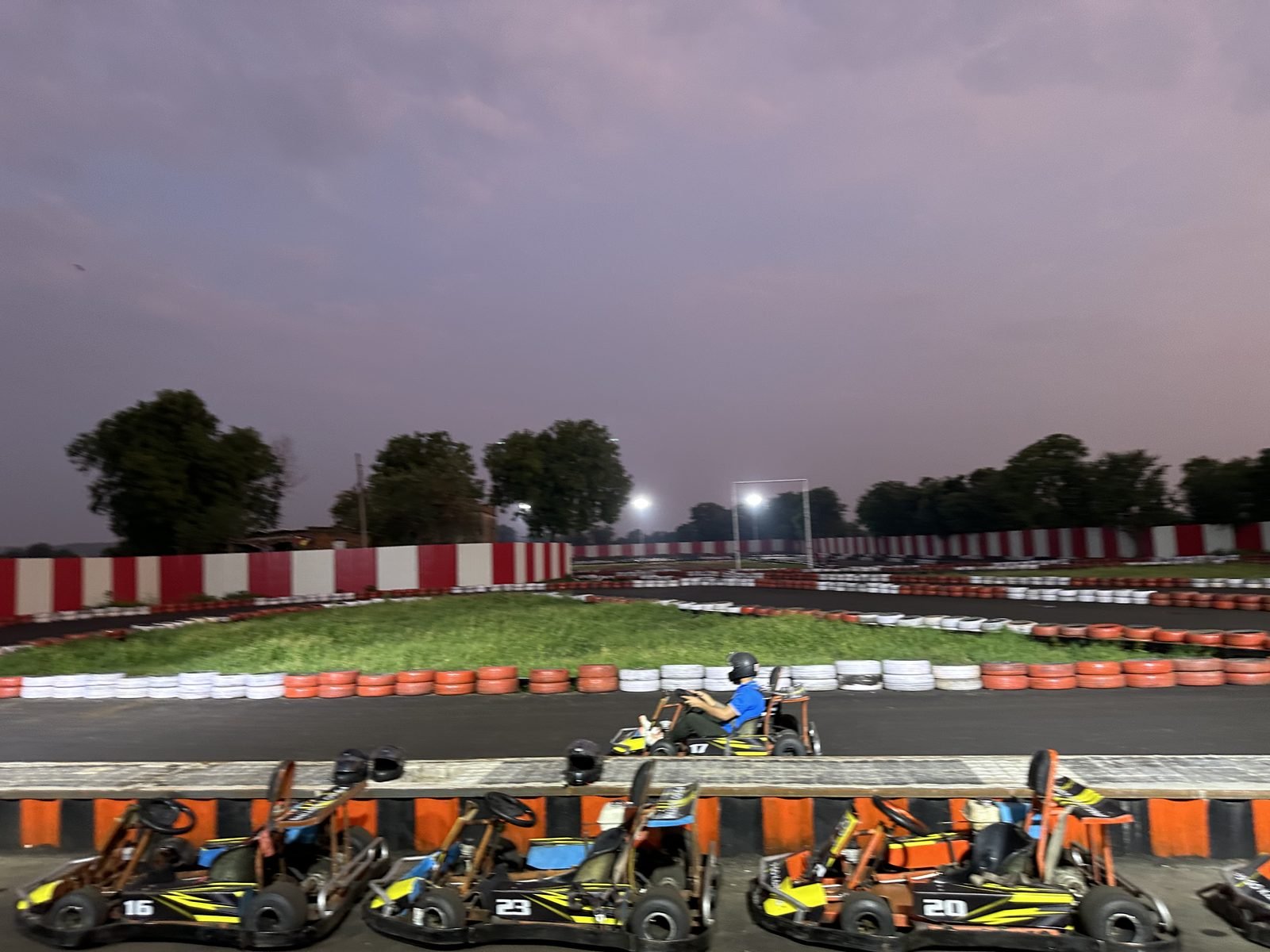
Karting sits outside the rules that govern road vehicles. A kart on private land is not a car, the driver does not need a licence, and there is no national statute setting a minimum age for recreational karting. What exists instead is a set of practical constraints that each venue turns into its own policy: the size of the kart, the speed it is capable of, whether the fleet includes a junior chassis, and how the session is marshalled.
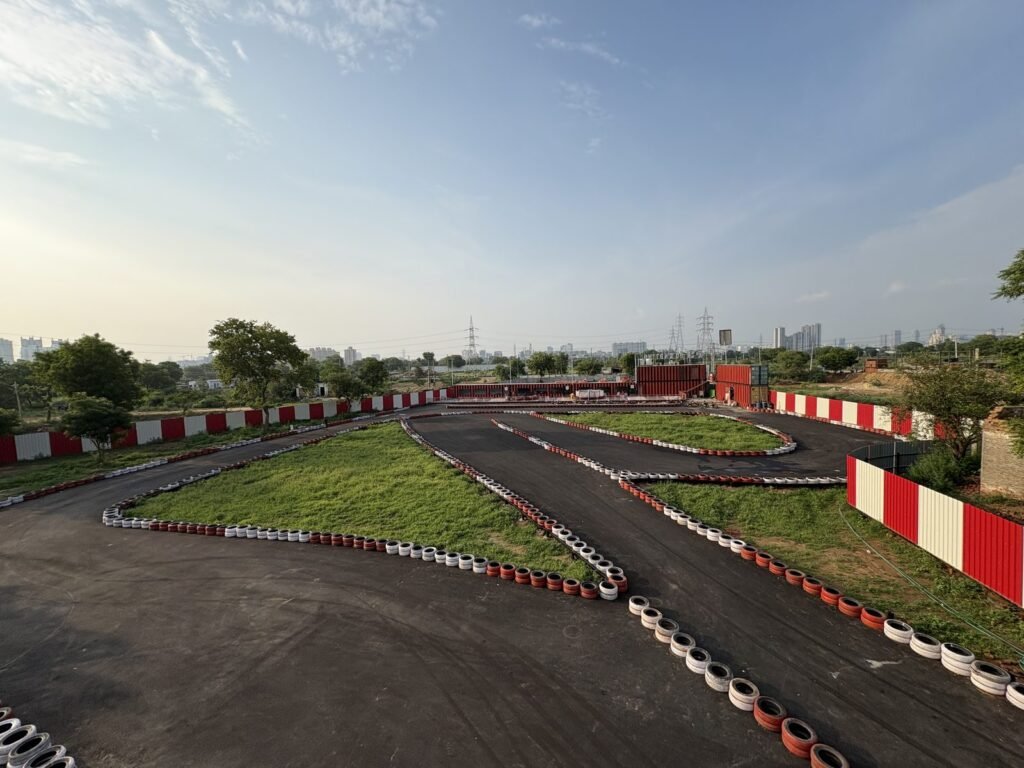
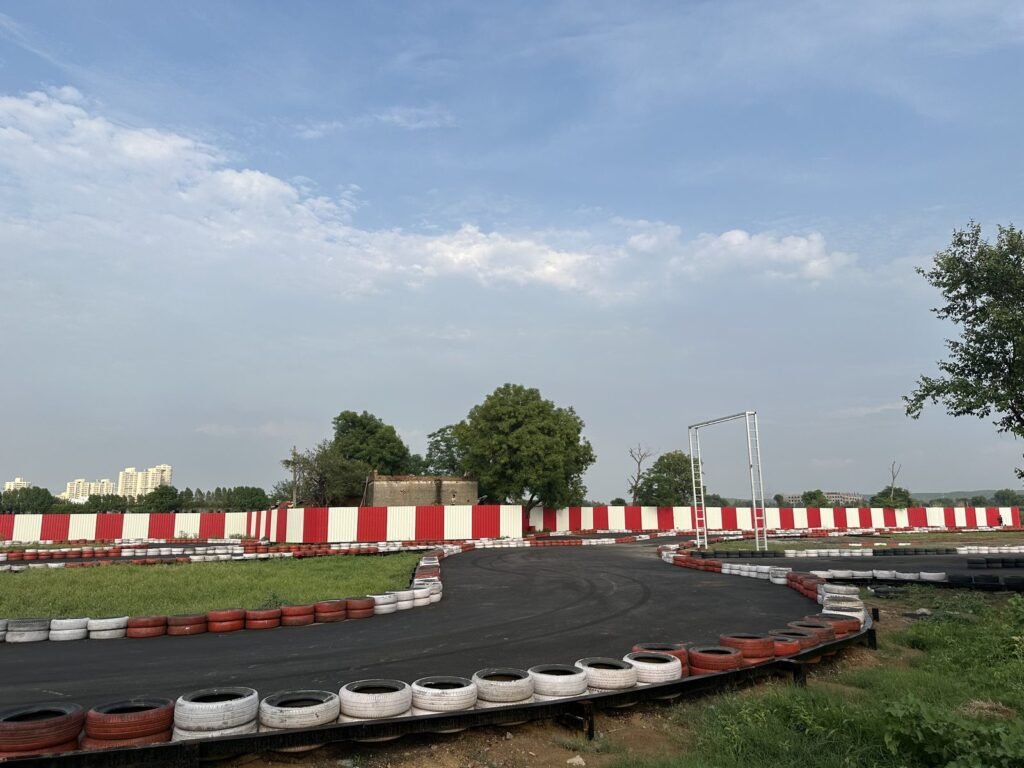
Because those differ from track to track, a number that is true at one venue is not transferable. A 450-metre circuit running small karts at modest speed can safely take a younger driver than a 1,050-metre circuit built for adults. The rule follows the kart, not the calendar.
Why height decides more than age
A driver has to do three things to control a kart: reach the pedals at full travel, sit deep enough in the seat that the harness and the side pods do the work in a corner, and wear a helmet that fits without tipping forward. All three are functions of size, not of age. A tall eleven-year-old can often do all three; a short fourteen-year-old sometimes cannot.
That is why a circuit will ask for height as well as age when you book, and why the answer can change when you mention that the child is small for their year. It is also why the question should be asked with the youngest, shortest driver in the group in mind rather than with an average.
What to ask before booking a child
Four questions, in this order, get you a usable answer.
- What is the minimum age and height for a driver on this circuit? Ask for both figures, and ask whether they differ between weekdays and weekends if the format changes.
- Is there a junior kart or a two-seater? Some venues run a smaller chassis or a passenger seat, which changes what is possible for a younger sibling.
- What happens if a driver is below the limit? The answer should be specific: spectating, a passenger ride, or nothing at all.
- Does the adult need to sign anything? Most venues require a consent or waiver for a minor. Ask who signs and whether it can be done in advance.
F9 does not publish a single minimum for the network, and the circuits differ. Call the circuit you intend to visit rather than relying on a general figure — the booking numbers are on each track page, and the same question can be put through contact.
What the limits look like in practice
Without a national rule, the pattern across Indian karting venues is set by the hardware. Circuits running small four-stroke karts on a short loop tend to set their floor lower, because the karts are slower and the marshals can see the whole track. Circuits running longer laps at higher speed set it higher, because the consequences of a mistake grow with the straight.
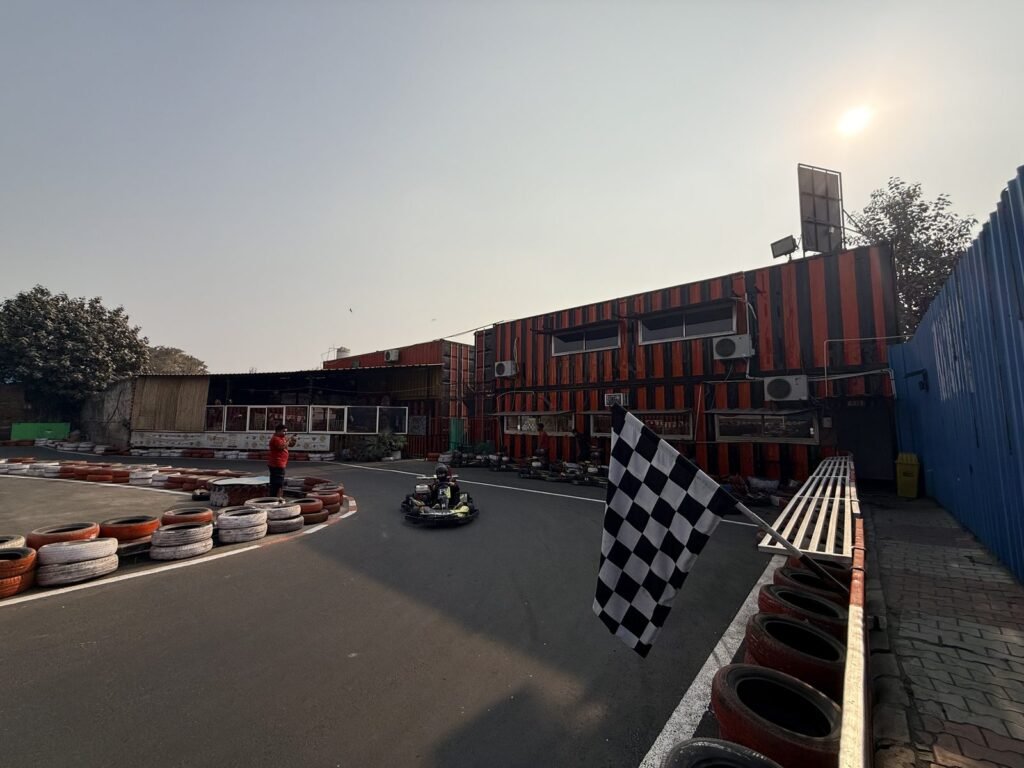
The other variable is the session format. A circuit that runs everybody in one group with mixed ability will be stricter than one that can run a junior heat on its own. If you are organising a family visit or a birthday, that distinction is worth asking about directly, because a venue that can separate the age groups can often accommodate a wider range of children on the same day.
If a child is below the limit
The visit still works, and the way to make it work is to plan the afternoon around the split rather than pretending it will not happen.
- Spectate from the barrier. It is the closest view of the track and, for a child who is not driving, usually the more exciting place to be.
- Ask about a passenger seat. Where the circuit runs a two-seater, an adult can take a younger child round, which delivers most of the experience without the driving.
- Set the timetable so the child is not waiting alone. If the older children drive first, the younger one has company at the barrier rather than a long empty half hour.
- Bring it back later. A child who is two centimetres short this year will clear the bar next year, and a return visit is a simpler promise than a compromise.
For a party where several guests are borderline, book the format rather than the age. A party that plans two heats — one for the older drivers, one mixed — absorbs a range of ages without anyone sitting out the whole afternoon. The teen party guide covers how that structure works in detail.
Is there an upper age limit?
Not in the sense of a rule. There is no maximum age for recreational karting, and circuits see drivers in their sixties regularly. What matters is fitness rather than age: the ability to sit low in a kart for twenty minutes, hold a wheel and climb in and out without help. Anyone with a neck or back condition, or who is pregnant, should treat karting the way they would treat any other physical activity and take advice first.
The practical question for an older driver is not whether they are allowed but whether a thirty-minute session is comfortable. It usually is; an hour on a long circuit is a different proposition.
What children should wear and expect
Trousers and closed shoes with a flat sole. No sandals, no open toes, nothing loose around the neck. Long hair tied back before the helmet goes on rather than after. That is the same list for a child as for an adult, and the what to wear guide covers the rest.
Expect a briefing before the session, given to the whole group. It covers the controls, the flags and the contact rules, and for a first-time child it is the part that decides whether the session is fun or frightening. A parent standing at the back of the briefing is usually welcome.
Questions parents ask
What is the minimum age for go karting in India?
There is no national minimum. Each circuit sets its own, based on the karts it runs and how it marshals a session. Ask the specific venue.
Can a ten-year-old drive a go kart?
Possibly, at a circuit with junior karts and a short track. It depends on height and reach as much as age, so confirm with the venue before booking.
Is height or age more important?
Height, in practice. The controls have to be reachable and the seat has to hold the driver properly. Age is a proxy for size, not a measure of it.
Do children need a licence or a consent form?
No licence. A consent or waiver signed by a parent or guardian is usual at most venues, and it is worth asking whether it can be completed before arrival.
Can a parent ride with a child?
Only where the circuit runs a two-seater. Ask when booking, because it is not available at every track.
Where to go next
The Sector 17/18 track page covers the most central circuit and the one most family visits start with. For the safety side, read is go karting safe, and for a family afternoon the family day out guide covers the rest of the plan. Parties start on the birthday party page. Directions are on Google Maps.
For a whole class rather than one child, school group go karting covers the driver count, consent forms and the wave plan in a single checklist.
Read next
Ready to race
Six outdoor circuits, 450 to 1,250 metres. Weekday laps from ₹700.
Book now or call 098115 48655