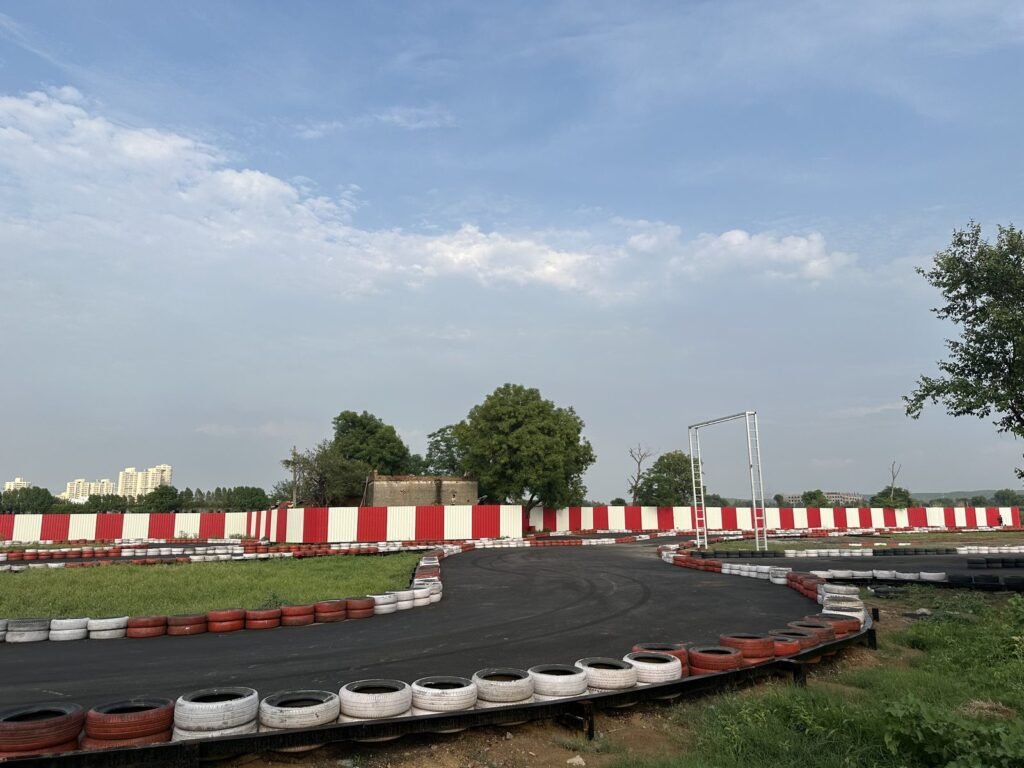
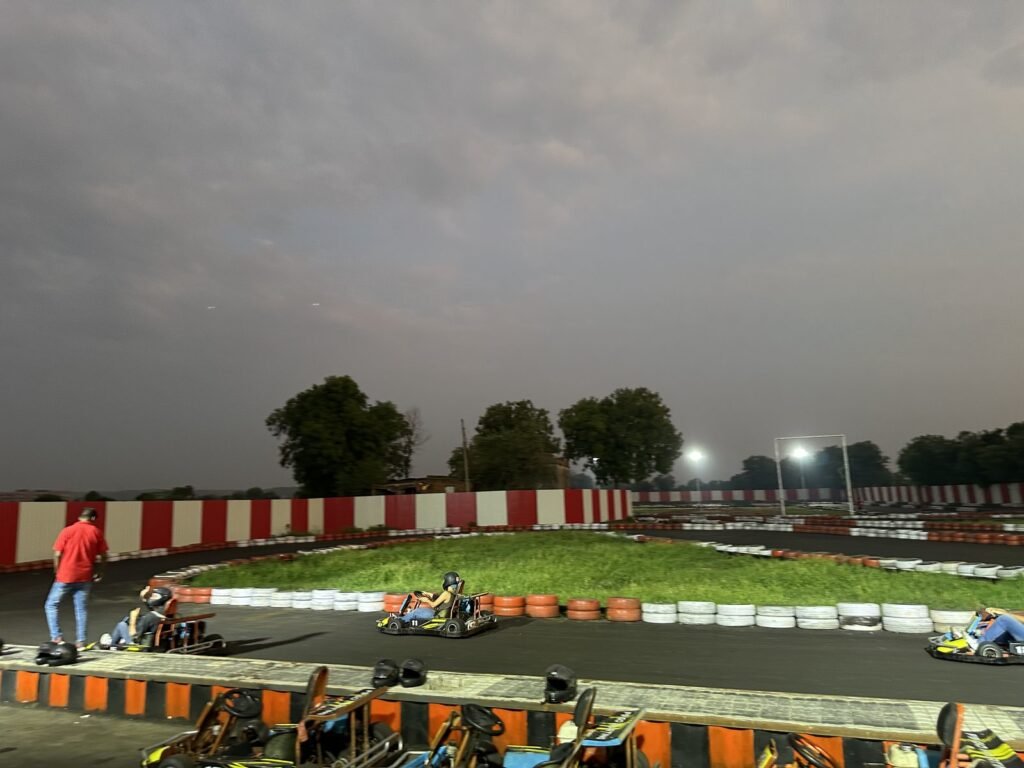
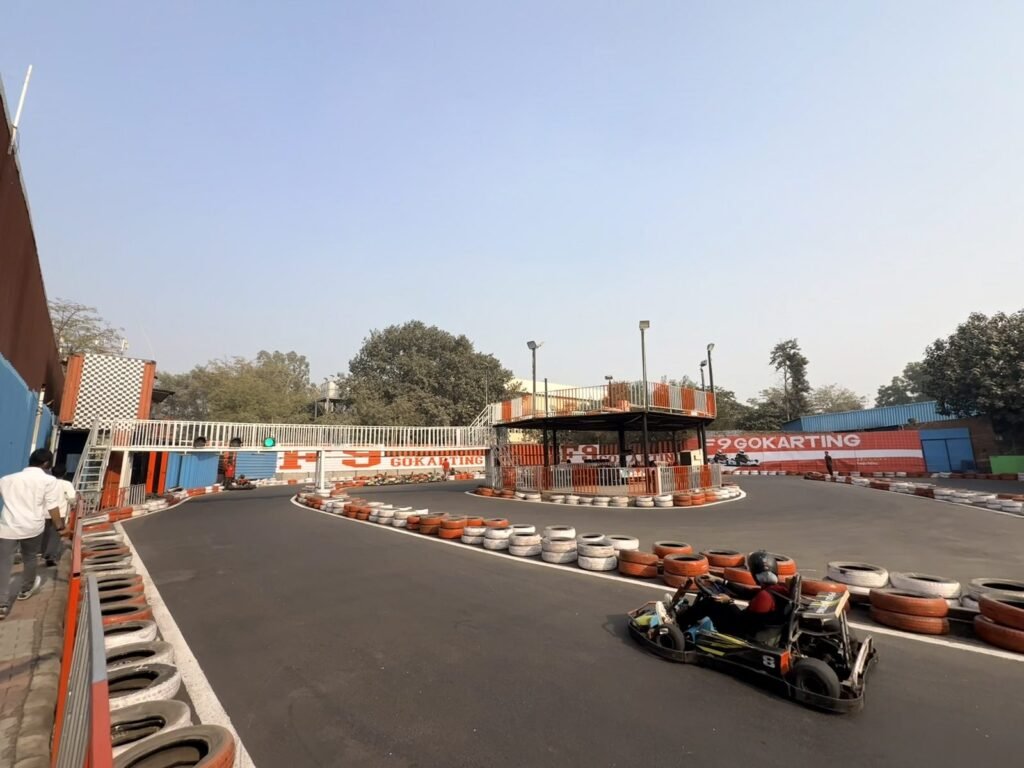
A kart that has just finished a session is not the kart that starts the next one. Between the two, a mechanic walks the machine, checks a short list and either sends it back out or pulls it off the grid. Go kart maintenance is mostly that: a repeated inspection done fast, plus a longer service schedule in the background. It is also the reason two karts on the same grid can feel completely different.
This page explains what actually gets checked, why fleets rotate karts, what a driver can notice and report, and why the same kart is quicker on one afternoon than another.
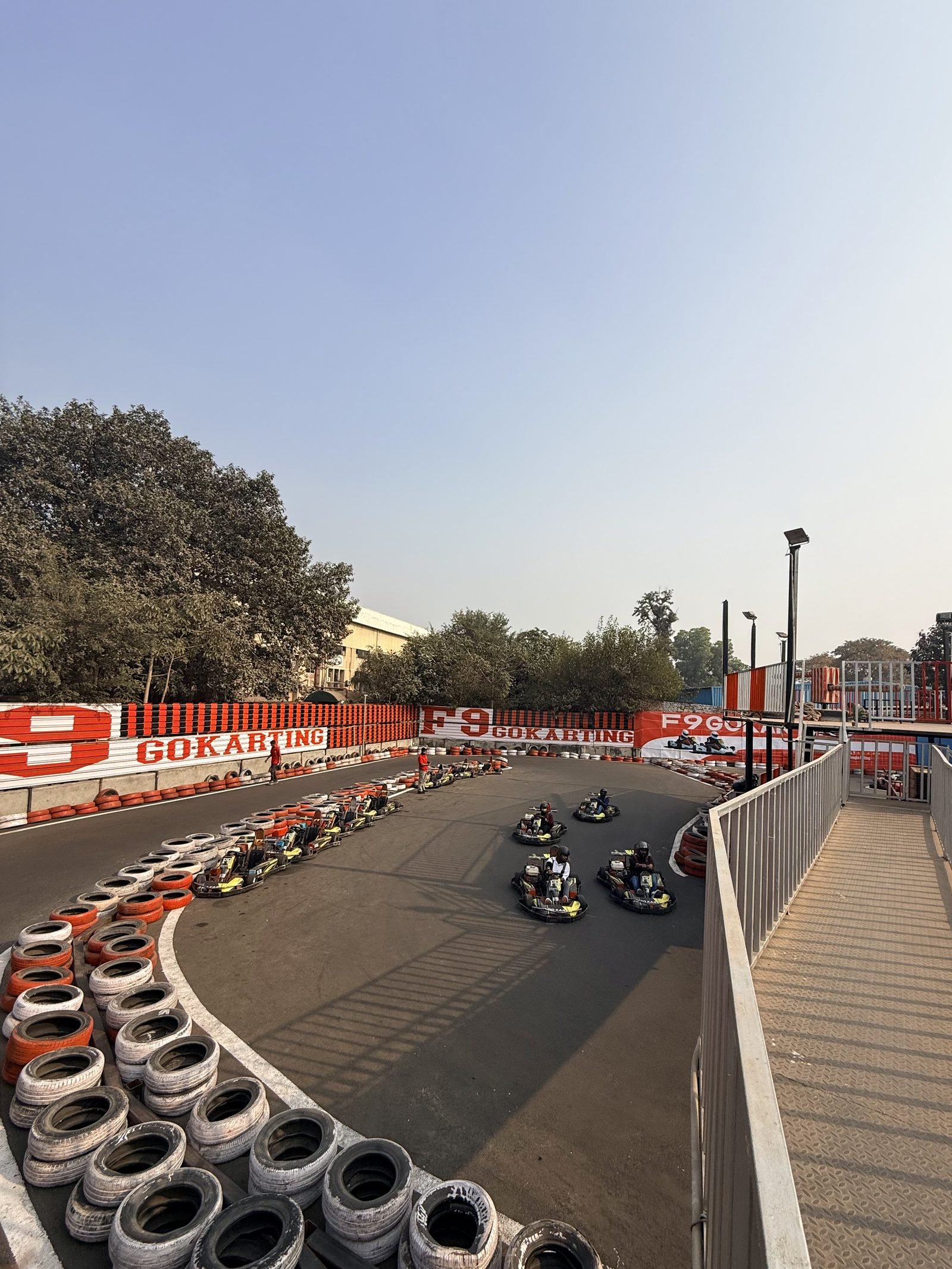
Go kart maintenance: the between-session walk
The turnaround check is short because it has to be. A busy grid runs sessions back to back, so a mechanic has minutes rather than hours per kart. That shapes what gets looked at: the things that fail quickly, hurt performance immediately or create a safety risk.
- Wheels and tyres. Pressure, tread or surface condition, and the wheel nuts. A soft tyre costs a second a lap; a loose nut ends a session.
- Brakes. Pad wear and pedal feel. A brake that has gone long is the most common complaint from drivers and the easiest thing to catch in a walk-round.
- Steering and suspension. Play in the wheel, bent track rods after contact, and the bolts that hold the steering column.
- Drive line. Chain tension and lubrication, sprocket wear, and the engine mounting bolts.
- Seat and belts. A seat that moves under braking is a driver who cannot feel the kart. Harness and seat bolts are checked every time.
- Bodywork and bumpers. Loose panels, cracked side pods and anything that could catch a wheel.
- Fluids and filters. Oil level, fuel, and an air filter that has been breathing dust all afternoon.
Anything that fails the walk is either fixed on the spot or the kart comes off the grid. That is the decision that matters: a kart with a fault does not go out because the group is waiting.
The longer schedule behind the walk
Rental karts are worked hard, so the visible check sits on top of an hours-based service. Most outdoor fleets run four-stroke engines and change oil on a fixed interval measured in running hours rather than kilometres, because a kart that spends its life at part throttle on a short circuit accumulates hours quickly and never sees a road.
Around that sit the slower items: brake fluid, bearings, clutch and drive components, and a full strip-down when a chassis has taken enough contact to be out of true. Tyres are a running cost rather than a service item — a fleet tyre is chosen for how long it lasts, not for ultimate grip, because a set has to survive hundreds of sessions rather than one qualifying lap.
Why fleets rotate karts
A grid of twenty rarely uses the same twenty machines all day. Karts rotate so that wear is spread, so that a kart with a developing fault can be rested without emptying a slot, and so that the fastest and slowest karts in the fleet do not end up in the same heat every time.
That rotation is why a driver who books twice can get two different karts, and why the same driver can be quicker on the second visit without driving any better. It is also why a circuit with a large fleet can keep a full grid running: there is always a machine ready to replace one that needs attention.
What a driver can notice, and why it matters
Drivers are the circuit’s best sensor. A mechanic walks twenty karts; a driver notices one, from the seat, in the first lap. Telling a marshal costs ten seconds and can save the next group a session.
- A kart that pulls to one side. Usually steering geometry or an uneven tyre. It is not in the driver’s head, and it should be reported.
- A long or soft brake pedal. Report it before the session starts rather than adapting to it, because adapting is how a driver runs out of road at the end of a straight.
- Vibration through the wheel or the seat. Often a wheel or a bent component after contact.
- An engine that cuts, hesitates or will not idle. Usually fuel or ignition, and usually fixable between sessions.
- A seat that moves, or a belt that will not tighten. A fit problem rather than a performance one, and the one most likely to be ignored by a driver who wants to get going.
The other thing worth reporting is a slow kart. A machine that is two seconds off the rest of the grid is a maintenance issue rather than a driving one, and a circuit with a healthy fleet will want to know which kart it was.
Why the same kart feels different on different days
Condition, not just setup. Track temperature changes how much grip the surface gives, and an outdoor circuit at midday in October is a different track from the same circuit at dusk. Tyre temperature follows, and a driver who has been out in the first session of the day will find less grip than one going out fourth, once a few karts have laid rubber down.
Fuel load matters too, along with brake bedding and the simple fact that a kart which has just come in hot behaves differently from one that has been standing. That variability is part of why lap times at a rental circuit are a rough measure of a driver rather than a precise one. The grip guide covers the surface side of it in detail.
What maintenance means for a booking
For a group, the practical effect is simple: a well-maintained fleet keeps a full grid running, and a large booking depends on it. Twenty karts on the grid at once requires twenty serviceable machines, which is why the bigger circuits are the ones that can take a party of that size.
It also explains why a circuit will sometimes swap a kart mid-session. That is not a failure; it is the system working. A driver who comes in with a complaint and gets a different kart has lost two minutes and gained the rest of the session.
And it is why the last session of a long weekend can feel different from the first. By then the fleet has done hundreds of laps, the track is rubbered in, and the mechanics have been turning karts around all day. The racing is usually better for it.
Questions about kart upkeep
How often are rental karts serviced?
Two schedules run at once. A short walk-round between every session, and an hours-based service for oil, brakes and drive components. Wear items like tyres sit outside both and are replaced on condition.
Why do two karts feel different?
Fleet variation, tyre condition, brake bedding and weight. No two karts in a rental fleet are identical, and rotation spreads the difference across a grid.
What should I do if the kart feels wrong?
Tell a marshal before the session if you can, or pull in and report it. A brake or steering fault is not something to drive around.
Do I need to check anything myself?
Check that the seat is secure, the belt tightens and the pedals reach comfortably before you set off. Everything else is the circuit’s job.
Are the karts the same at every F9 circuit?
The karts and the circuits differ, which is why a 450-metre lap and a 1,050-metre lap feel nothing alike, and why the same package buys a different experience at each track. The tracks page lists each circuit and its length.
Where to go next
For the safety side of the same subject, read is go karting safe. For driving rather than machinery, the faster lap guide covers braking and lines. The Sector 59 guide explains the largest fleet and grid on the network. Enquiries go through contact, and directions are on Google Maps.