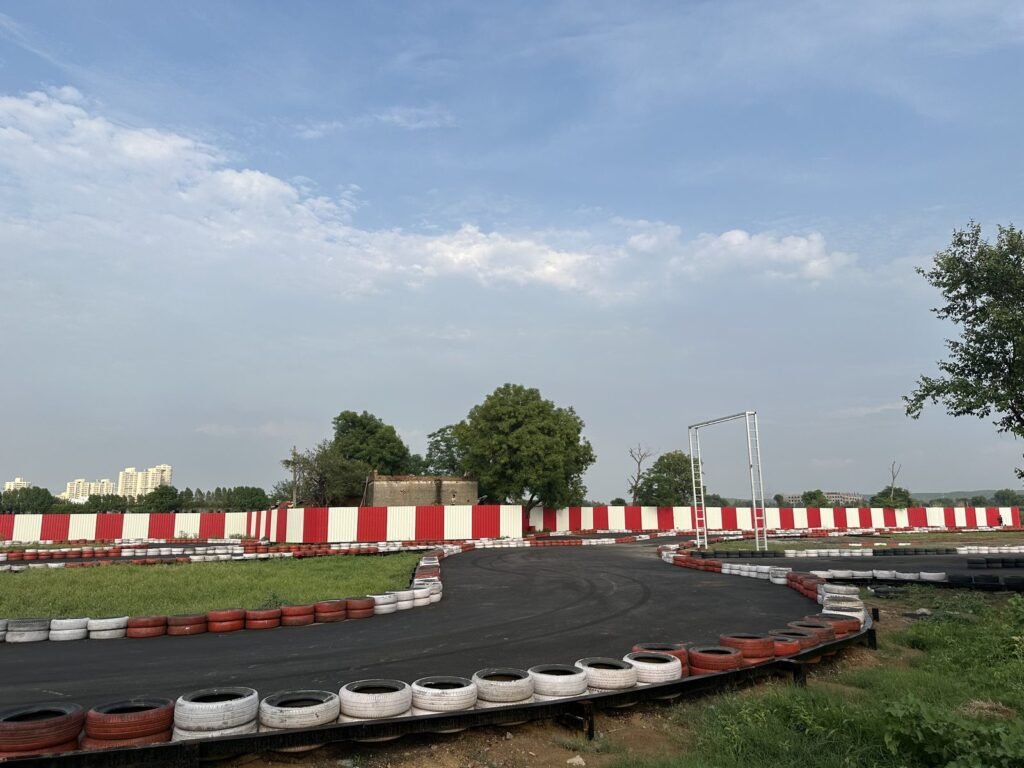
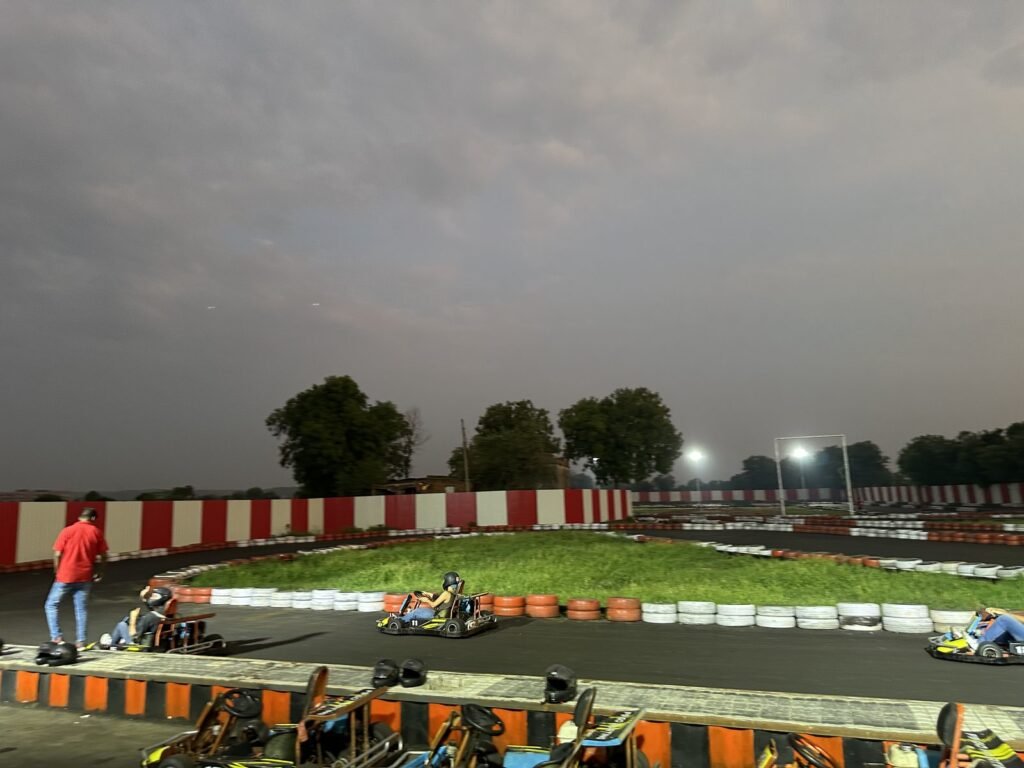
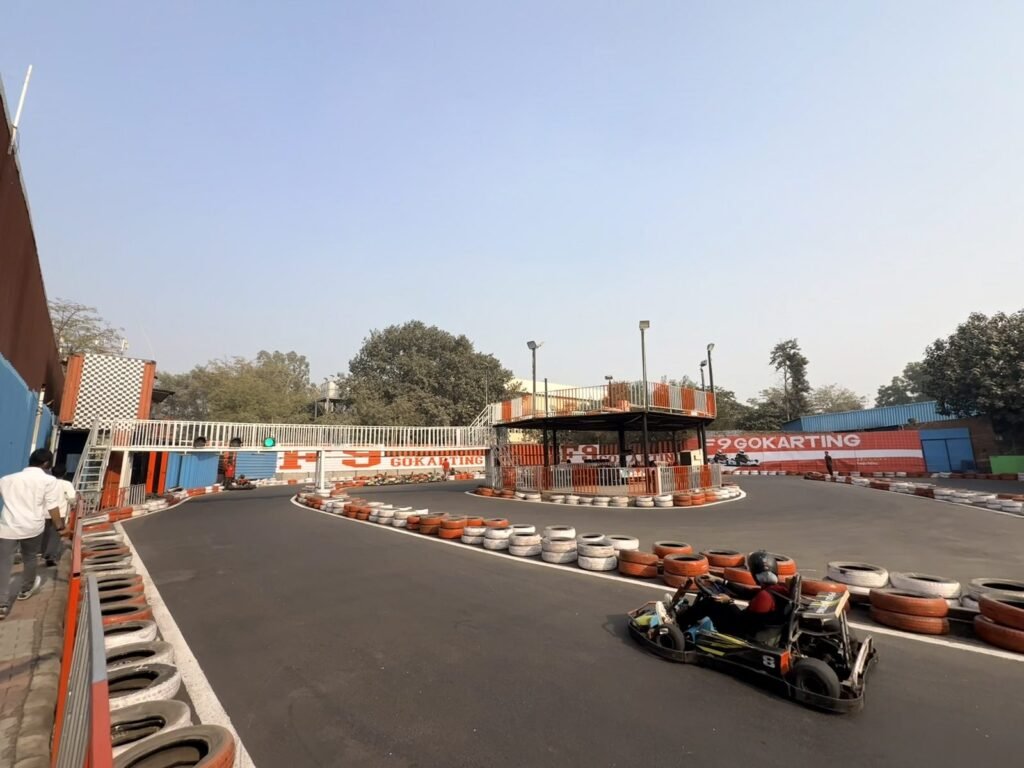
A college fest is a different animal from a birthday or an office outing. The group is large, the budget is fixed before the event, the schedule is published weeks in advance, and a hundred students will arrive whether or not anyone planned for them. College fest go karting works well in that setting, but only if the organisers do the capacity arithmetic before they print the poster.
These are planning notes for the student who has been handed the “motorsport event” portfolio and has to produce something that runs on time. They cover formats, capacity, cost per head, paperwork and the three mistakes that make a fest karting event collapse on the day.
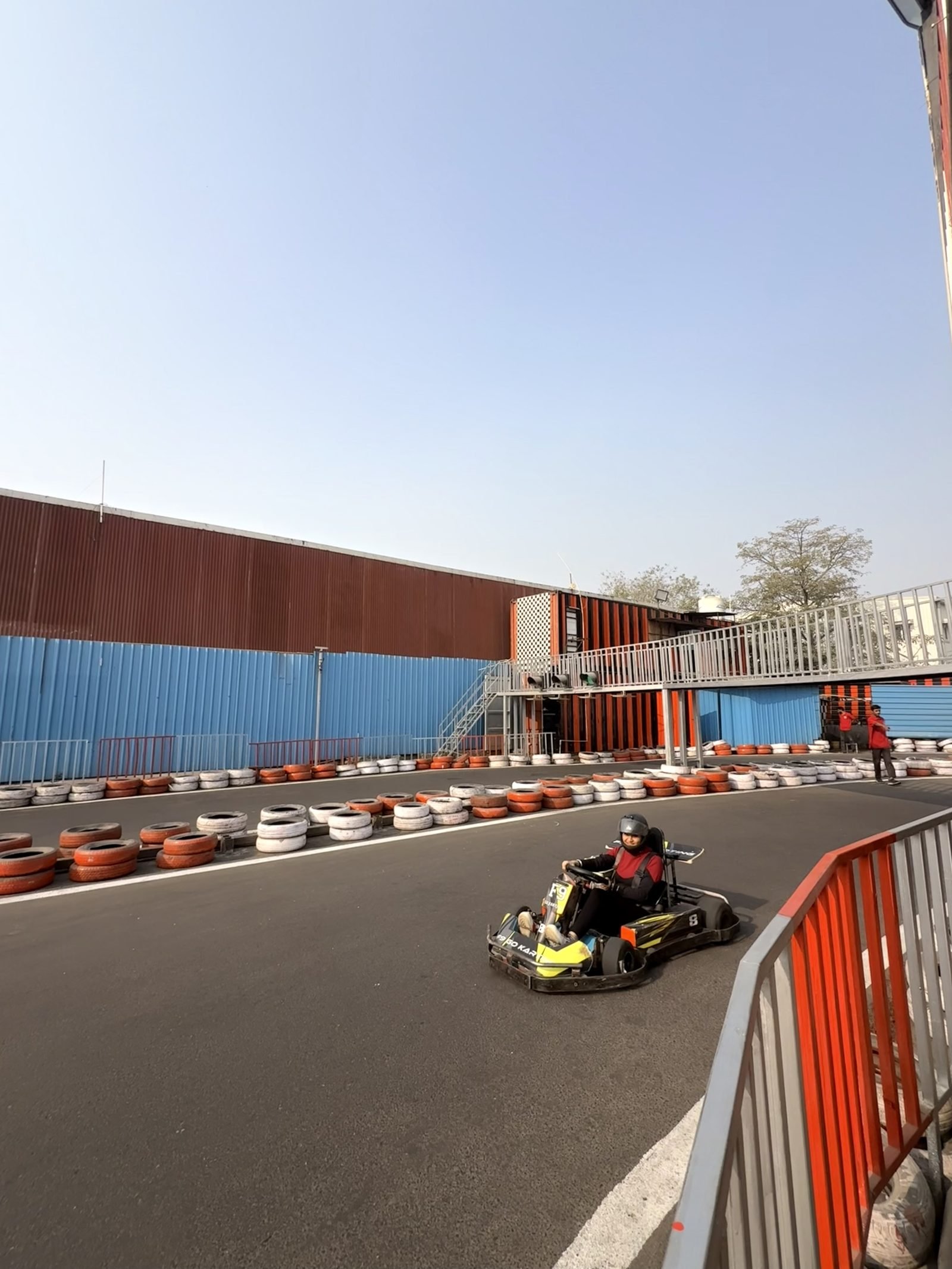
College fest go karting: start with capacity, not ambition
Every circuit has a hard ceiling: the number of karts on track at once. At F9, that ranges from six karts at Sector 17/18 to twenty at Sector 59, Sector 68 and Dwarka Expressway. That number, not the size of your college, determines how many people you can put through in a day.
The arithmetic is simple and unforgiving. Twenty karts for thirty minutes means twenty drivers every half hour, which is forty drivers an hour at best. If two hundred students sign up, you need five hours of continuous running with no gaps, no briefings and no latecomers. In practice, allow a real-world figure of thirty-five drivers an hour and plan around it.
Therefore the first decision is whether you are selling a full session to everyone or a short qualifier to many. Twenty karts for fifteen minutes can move twice as many people through the same afternoon, and for a fest crowd that is usually the right trade.
Three formats that work in a fest
The knockout. Heats of twelve to twenty karts, top finishers progress, final at the end of the day. It creates a narrative and a crowd, because people stay to watch the final. The cost is time: each heat needs a changeover.
The best-lap qualifier. Everyone gets one short session, lap times are recorded, and the fastest drivers go into a final. This is the most efficient format for large numbers, and it works even if the circuit does not print times — a marshal with a stopwatch and a clipboard will do.
College versus college. Teams of ten from different institutions, points across heats, a trophy. This is the format that gets sponsors interested, because the audience is not just your own campus.
Pick one. A fest that tries a knockout, a relay and an open session in the same afternoon will finish none of them.
Cost per head, and how to fund it
Group blocks are priced per kart, so the per-head figure depends on how completely you fill the grid. At Sector 68 or Dwarka Expressway, twenty karts for thirty minutes is ₹32,000, which is ₹1,600 a driver. Twelve karts for the same half hour is ₹21,000, which is ₹1,750. Filling the grid saves money, and an unfilled grid is the most common budget error in a fest plan.
For two hundred students over five hours at twenty karts a heat, the kart bill alone reaches ₹3,20,000 at the thirty-minute rate. That number is why most college events choose shorter sessions: the same grid at fifteen minutes costs roughly half, and twice as many people drive.
Funding usually comes from three places. A participation fee is the simplest, and it also stops people signing up casually and not turning up. A title sponsor — a bank, a phone brand, a coaching company, an energy drink — pays for naming rights and gets the crowd. The college’s events budget covers the gap. Ask the track for a single line-item quote for your grid size and session length, because that document is what a sponsor actually needs to see.
The paperwork nobody mentions
Every venue will want to know who is driving and who is responsible for them. For a college event, that means a consent sheet collected at registration rather than on the day, a list of participants with contact numbers, and a named faculty coordinator. Some tracks will require an indemnity signed by each driver; confirm the requirement when you book, because collecting signatures for a hundred people takes longer than you expect.
Age and identity come up too. Anyone under eighteen is usually the venue’s call rather than yours, so bring the question to the track early. For a first-year-heavy crowd, that conversation decides whether you can open the event to the whole college or only to seniors. The age limit guide explains how venues generally set these rules.
Then there is the college’s own process: approval for an off-campus event, transport, first aid and a faculty escort. None of it is karting, and all of it has to exist before the karting does.
Logistics: the part that decides the day
Buses are cheaper than cars and easier to control. Two hundred students in fifty cars is a traffic problem at the gate and a marshalling problem at the counter. Book transport in waves instead: group one arrives for the first heats, group two an hour later. That also keeps the crowd at a manageable size at any moment.
Bring your own volunteers and give them jobs. One person runs the registration desk, one manages the queue to the karts, one keeps the schedule and one handles first aid and water. The track supplies marshals for the circuit; it does not supply event staff for your queue.
Finally, publish a running order with times against heats, and be willing to cut a heat if you fall behind. A fest audience is forgiving about a late start and much less forgiving about standing in the sun for an hour.
Three mistakes that sink the event
First, overbooking. If your grid holds twenty and four hundred students register, you have sold seats that do not exist. Cap registrations at a number you can actually run, and keep a waiting list.
Second, no buffer. Every heat that overruns by five minutes pushes the whole day. Build ten minutes into every hour and the schedule survives.
Third, treating it as one race. A fest event with two hundred entrants is a production line with a final attached. The group booking guide sets out the booking sequence for large grids, and the six-circuit comparison shows which venue takes twenty karts.
Questions organisers ask
Which circuit should we choose? The biggest grid you can fill. Sector 59, Sector 68 and Dwarka Expressway all take twenty karts, and Sector 59 is the only venue running sixty-minute blocks.
Can we run our own timing? Ask first. If the circuit records laps, use its system; if not, a stopwatch and a clipboard is enough for a qualifier.
How far ahead should we book? Before the fest schedule is published, not after. A date and a grid size are all the track needs to hold the slot.
Is sponsorship money realistic? For a two-hundred-person event at a named venue with a visible crowd, yes. Sponsors buy attendance, so give them a number.
Take the plan to the track early. Say the date, the number of drivers and the length of session you can afford, and ask for a quote on letterhead — that document is what gets your event approved internally. Contact F9 Go Karting to start that conversation, and check the drive before you fix the schedule on the Sector 68 map link.
Related reading
- Birthday Party Checklist Go Karting: 30 Days to Race Day
- Corporate Team Outing Go Karting Gurgaon: Planner’s Guide
- Is Go Karting Worth It? An Honest Breakdown
- Farewell Party Ideas Gurgaon: A Karting Send-Off Plan
Where to drive. Every F9 rate is on the track’s own page, not a central list: Sector 68 (1,050 m) and Sector 59 (850 m) publish weekday laps and weekend time slots separately, 18% GST included.