Ask whether is go karting worth it as a money question and the honest answer usually arrives as a feeling rather than a number. That is a problem, because the money question has a real answer. A karting session is priced per kart or per driver, it lasts a fixed number of minutes or laps, and everything it includes is visible before you pay. Once you divide the price by the time you are actually moving, the comparison stops being about whether karting feels expensive and starts being about what you are buying.
This page does that arithmetic on F9’s own published rates, explains what sits behind the number, and is honest about the cases where a session is not worth the spend. It is written for someone deciding between karting and something else for a birthday, an office evening or a Saturday with friends.
Is go karting worth it? Start with cost per minute
Most activities are sold as an experience, so the price is hard to interrogate. Karting is not. You buy either a lap count or a block of minutes, and both can be divided. First, look at the weekend rate at the Sector 17/18 circuit on Link Road: eighteen minutes costs ₹1,200, which is about ₹67 a minute. Thirty minutes at Sector 59 costs ₹2,100, about ₹70 a minute. Thirty minutes at Sector 68 costs ₹2,200, about ₹73 a minute.
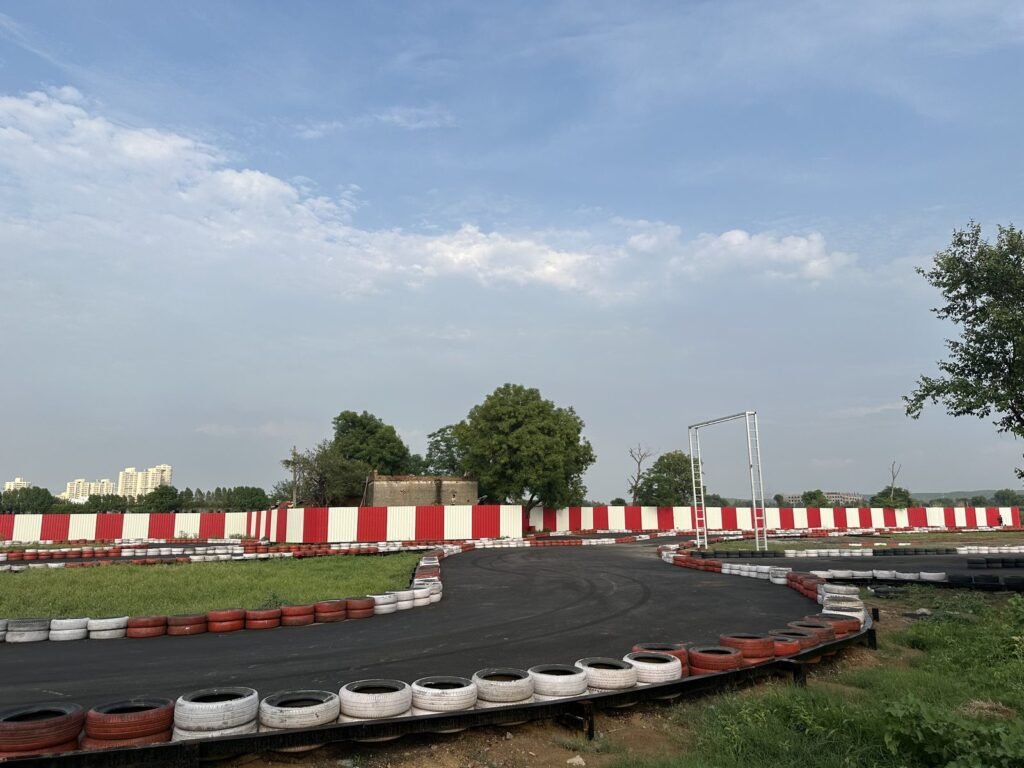
Those three figures sit close together, which tells you something useful. Across the network, a minute of track time costs roughly ₹65 to ₹75 on a weekend, whether the circuit is 450 metres or 1,050 metres. What changes with the longer track is not the price of a minute. It is what happens inside that minute.
Weekday pricing works differently, because weekdays are sold on laps. At Sector 17/18, sixteen laps cost ₹700 — about ₹44 a lap. Twenty-two laps cost ₹800 and thirty-four laps cost ₹1,100, which brings the price down to roughly ₹32 a lap. The last eighteen laps are cheaper than the first sixteen. That is the single most useful fact in the rate card, and it is covered in more detail on the Sector 17/18 track page.
What the price actually includes
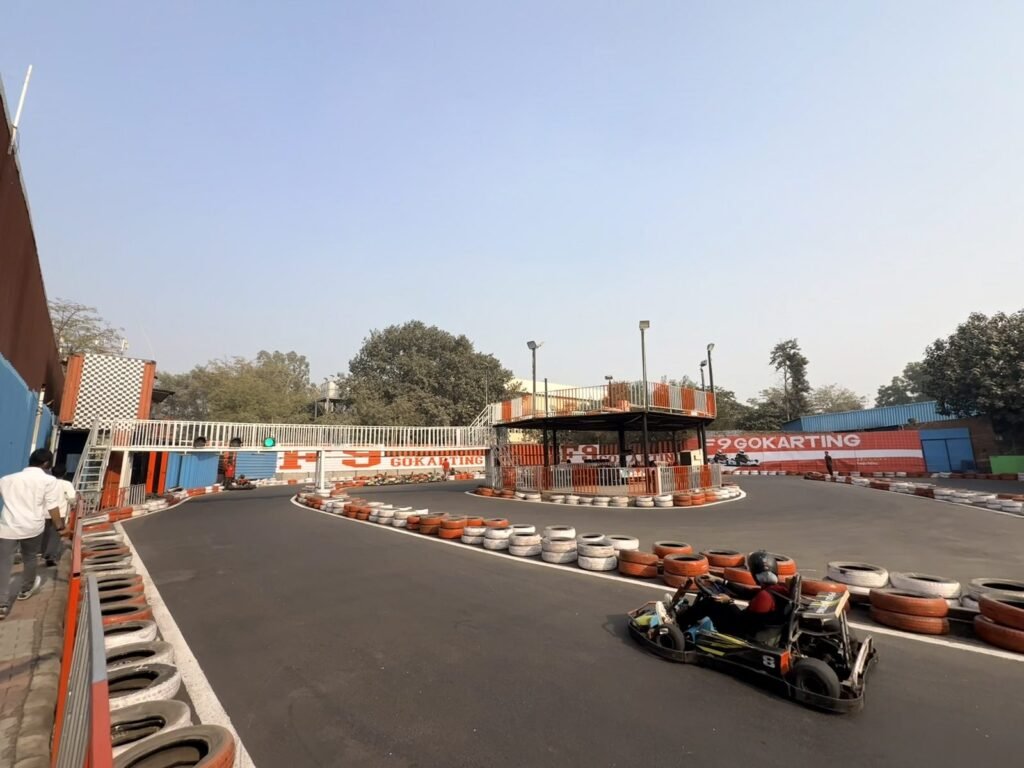
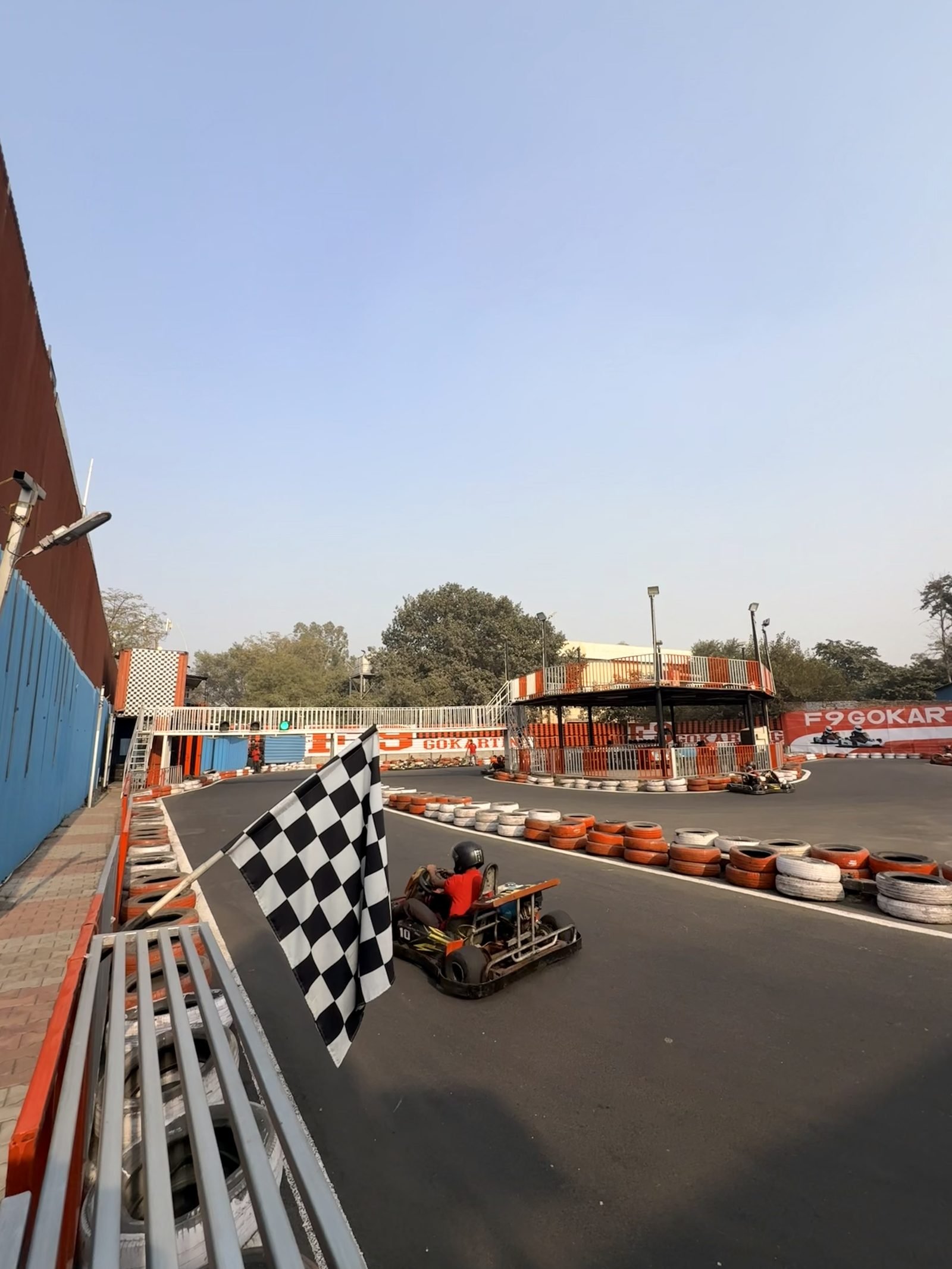
A session is not just the minutes. Before you drive, someone briefs the group on flags, braking points and what happens if you spin. Then you are fitted with a helmet, seated, belted and sent out. While you are circulating, a marshal is watching the whole circuit and can stop the session. When you come in, the kart joins a queue that gets checked before it goes out again.
Therefore the price covers a prepared machine, a controlled circuit and a person whose job is to keep twenty drivers apart. That is why karting costs more per minute than a cinema seat in the same city, and why the comparison is unfair in both directions. A cinema holds two hundred people in the dark and needs one projectionist. A kart circuit holds twenty people at speed and needs eyes on every corner.
- Included: the kart, a helmet, the safety briefing, marshal cover and the circuit itself.
- Usually not included: food, drinks, photography, and anything that happens after the session ends.
- Worth asking: whether lap times are printed or shown on a screen, because a session with times is a different product from one without.
The group maths is where the value changes
Solo drivers pay the walk-in price and get a session. Groups buy a block of karts, and the block is priced better per head. At Sector 68 and Dwarka Expressway, twelve karts for thirty minutes is ₹21,000, which is ₹1,750 a driver. Twenty karts for sixty minutes is ₹52,000, which is ₹2,600 a driver for double the time. The second is more money overall and better value per minute, because the circuit is already staffed and already yours.
Then the arithmetic inverts. A group of twenty sharing thirty minutes gets less individual time than a group of twelve, even though each driver pays less. If the point of the evening is that everyone drives, a smaller grid with a longer session usually beats a bigger grid with a short one. If the point is that everyone is present and half of them are watching, the bigger block is fine. The six-circuit comparison sets out which tracks take which grid sizes.
When it is worth it, and when it is not
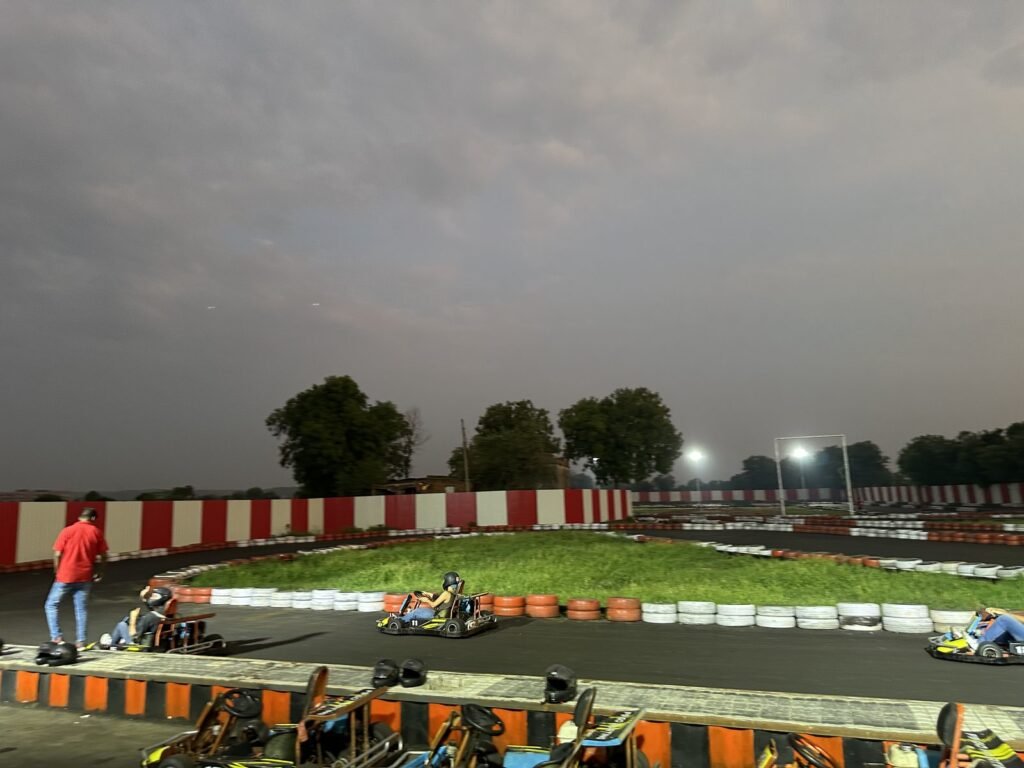
Karting earns its price in a few specific situations. It works when the group is mixed in ability, because nobody is eliminated and nobody waits for a turn. It works when the group is eleven to fourteen people, because that fills a grid without a queue. It works when the venue is close, because a two-hour drive each way turns a thirty-minute session into a five-hour day.
It is harder to justify in three cases. A twelve-minute session for a group of twenty is mostly waiting, so spend the money on time rather than headcount. A weekday morning for six people is cheap per lap, but the circuit is quieter and the racing is less interesting. And a group that mainly wants to talk will spend the session shouting over engines, which is a poor use of ₹2,600 a head.
How to spend less without losing the session
Three levers move the price more than anything else. First, drive on a weekday, when laps replace minutes and the price per lap falls as the lap count rises. Then choose the track by distance: a circuit twenty minutes away is worth more than a longer one an hour away, because the drive is part of the cost even when it is not part of the bill. Finally, book as one group rather than as individuals, because group blocks are priced per kart and the per-head figure drops sharply.
One more thing is worth knowing before you decide. The price you see already includes 18% GST at every F9 circuit, so there is no surprise at the counter. That is not universal in this category, and a quote that grows by a fifth at payment is not the quote you compared.
Questions people ask before booking
Is one session enough? For a first visit, yes. Most groups book a second block once they have driven the first, which is why the fifty-minute option at Link Road exists.
Does a longer track cost more? Not per minute. It costs more per lap, because a lap at Sector 68 is 1,050 metres against 450 at Link Road. You are buying distance, not time.
Is it worth it for a birthday? It is, if the group drives rather than watches. The birthday party page shows what each track offers in kart blocks, and the per-head figure is the number to compare.
If you want the exact figure for your group size and date, the fastest route is to name the number of drivers and the circuit you are considering. Contact the track with those two details and ask for the block price, then divide it by the minutes. That number is the only one that answers the question honestly.
Directions to any of the six circuits are on Google Maps — for example, the Sector 68 circuit — and the drive time is worth checking before you commit to a slot.