A kart that slides is not broken. It is telling you something about the surface, the tyres or the way you are asking it to turn, and most drivers respond by doing more of whatever caused the slide. This go kart grip explained guide covers what grip actually depends on, why the first two laps always feel loose, and what to change when the kart starts to slip.
None of it requires a setup sheet. A rental kart has one brake, one throttle and four hard tyres, so the variables available to a driver are inputs and timing rather than hardware.
Go kart grip explained: the four things that decide it
Grip is the force between the tyre and the track that lets a kart change direction, brake or accelerate without sliding. Four things set how much of it is available: the tyre, the surface, the temperature, and how smoothly the driver asks.
- The tyre. A rental kart runs a hard compound that lasts, which means it gives less grip than a soft race tyre. That is a deliberate trade and not a fault.
- The surface. Fresh tarmac is abrasive and grippy. Dust, sand, water and spilled fluid all sit between the tyre and the track and take grip away.
- The temperature. Rubber needs heat to work. A cold tyre is a slippery tyre, and a very hot track can make a hard compound greasy.
- The driver. Smooth inputs use the available grip. Sharp ones ask for more than is there, and the kart slides.
Why the first two laps are always the worst
Three things are working against you at the start of a session. The tyres are cold. The track has been sitting between sessions and has collected dust. And the rubber that other karts laid down has cooled and gone off.
That is why the first lap of a session feels like driving on a different surface. It is a different surface. The correct response is to build speed over two or three laps rather than to test the limit immediately, because the limit on lap one is much lower than the limit on lap five.
The same logic applies after a red flag or a long pause. The tyres cool quickly when a kart is stationary, and the first lap after a restart is a cold-tyre lap no matter how many laps came before it.
Track temperature and time of day
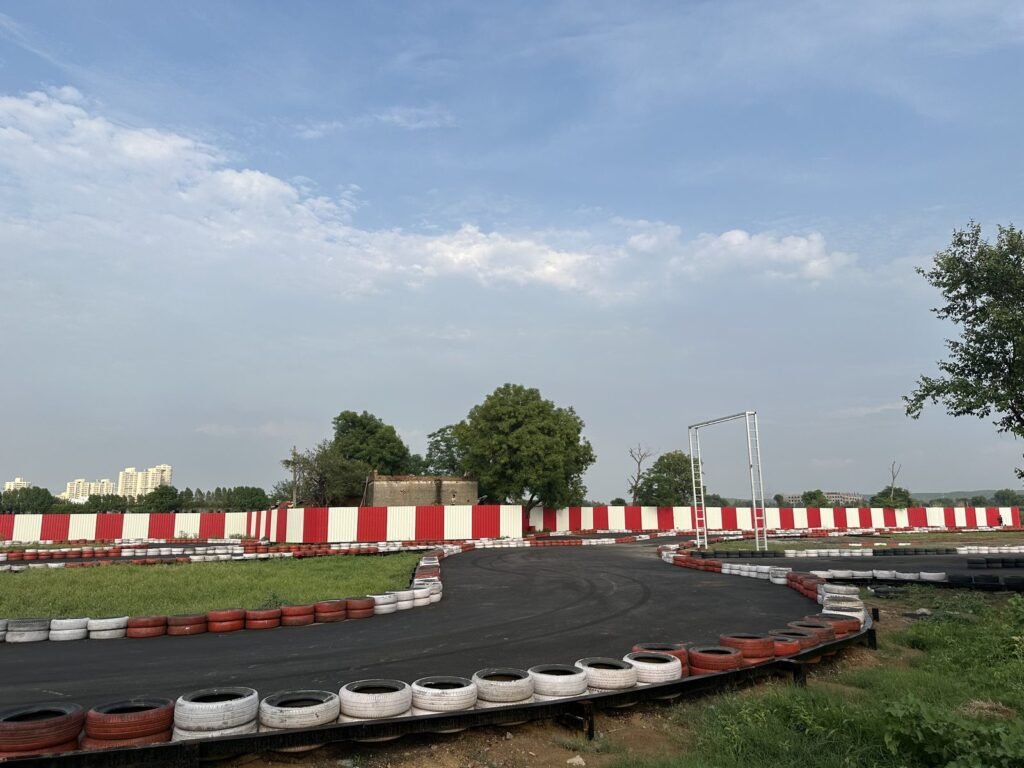
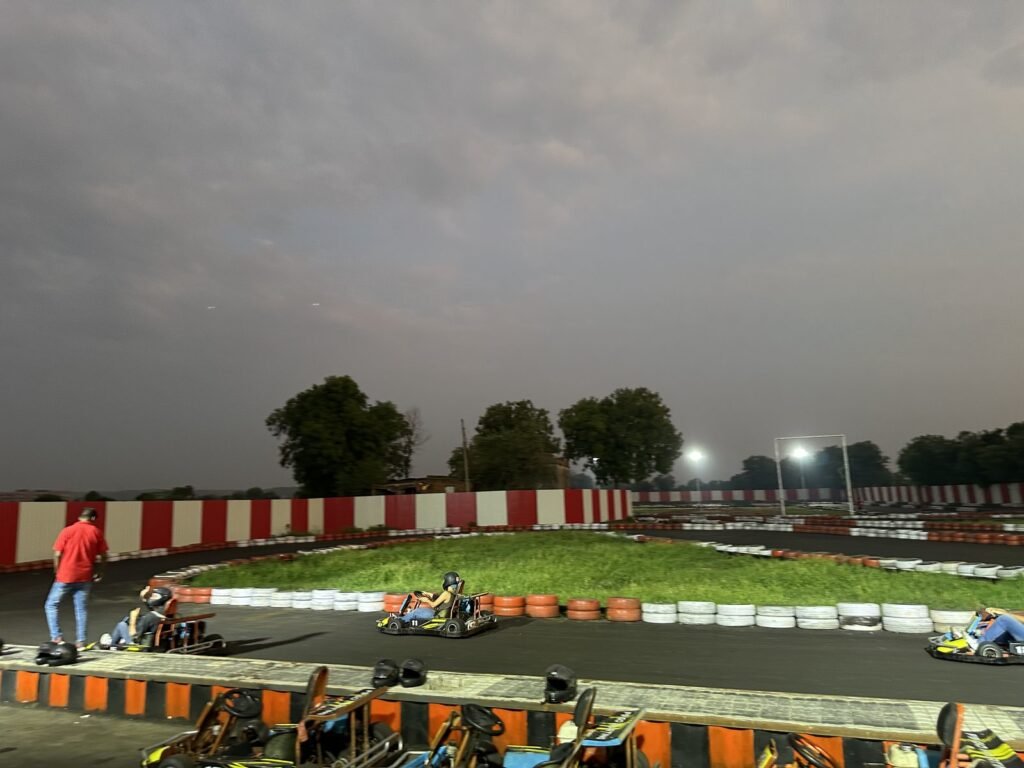
Tarmac absorbs heat through the day. A circuit that is grippy at midday can be greasy in the late afternoon once the surface has released that heat, and a circuit that feels slick in the morning usually comes good as the sun gets on it.
On an outdoor circuit this is the single biggest variable between two sessions on the same day. Two drivers can run identical laps and get different results simply because one drove at 11 in the morning and the other at 5 in the evening.
What slipping actually looks like
There are two kinds, and they need opposite corrections.
Understeer is the front sliding. The kart keeps going straight while the wheel is turned, and the driver’s instinct is to turn more, which makes it worse. The fix is to reduce the steering angle and slow down enough that the front tyres can bite again.
Oversteer is the rear sliding. The kart rotates more than the driver asked for, and the instinct is to lift off the throttle sharply, which transfers weight forward and can spin it. The fix is a gentle lift and a smooth correction, or a small amount of throttle to settle the rear if the kart is already pointing where you want it.
Most novice spins are oversteer caused by lifting mid-corner. The kart was fine until the driver reacted.
The three inputs that lose grip
- Braking too late. The kart arrives at the corner with the tyres already at their limit, so there is nothing left for turning. Brake earlier and carry less speed in, and the corner becomes calm.
- Braking and turning at the same time. A tyre has one budget. Asking it to slow and steer at once divides that budget between two jobs, and the front washes out.
- Throttle too early. Applying power before the kart is pointing at the exit pushes the rear wide and forces a correction. Wait until the kart is straight enough that the throttle adds speed rather than rotation.
All three are timing errors rather than technique errors, which is why they are fixable within a single session. A driver who brakes ten metres earlier usually goes faster, not slower, because the kart carries more speed through the corner instead of scrubbing it off at the entry.
How to drive a low-grip session
When the track is slippery — first laps, a damp surface, a dusty afternoon — four changes make a session work.
- Brake earlier and lighter. Longer braking zones, less pressure at once.
- Turn in later. A wider entry gives a straighter line through the apex and less steering angle at the point of maximum load.
- Be gentle with the wheel. One smooth input instead of two corrections.
- Accept a slower lap. A lap that feels slow and tidy is usually faster than one that feels fast and sideways, on a low-grip surface especially.
Rain changes the calculation further. Standing water means the tyre is displacing water rather than touching tarmac, and grip drops sharply. If a session is running in the rain, ask the marshal whether the format changes before you drive, because some circuits shorten or pause sessions in heavy water.
When it is not the driver
Sometimes the kart or the track is the problem, and it is worth knowing the difference. If the kart slides in the same place on every lap regardless of how you drive it, something has been dropped on the track or the surface is damaged there. Report it to the marshal at the end of the session rather than trying to drive around it.
The same applies if a kart behaves differently from the others in the same session — a rear tyre that is losing pressure, or a brake that is grabbing. That is a maintenance issue rather than a driving one, and the marshal needs to know.
Grip outdoors versus indoors
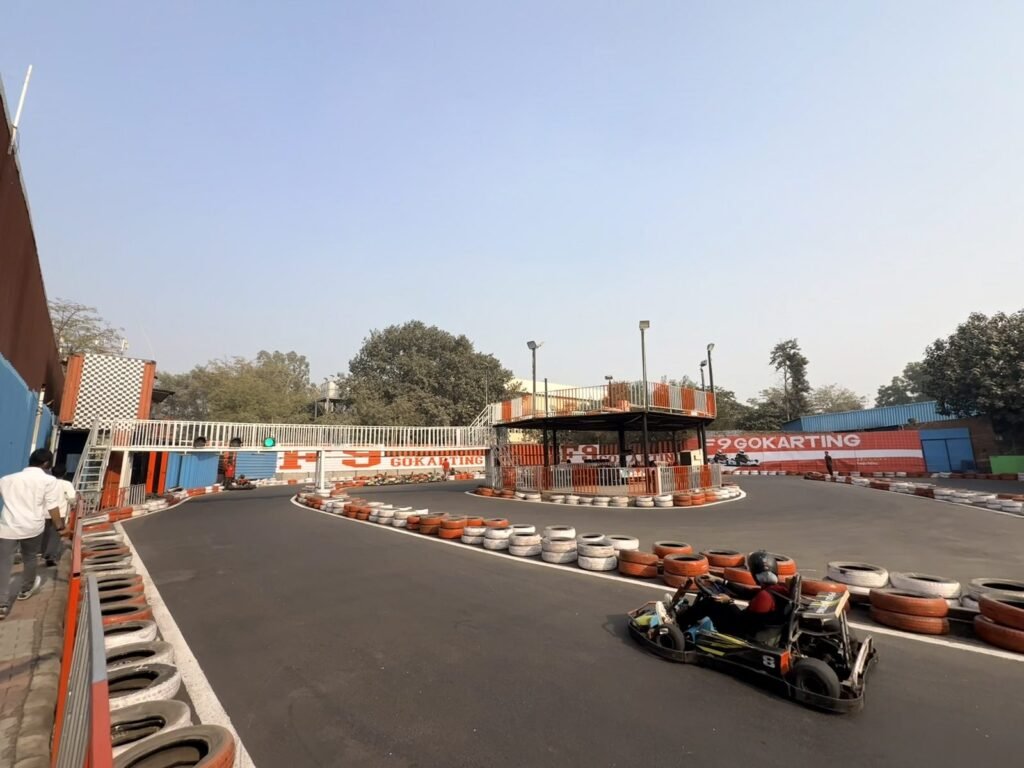
An outdoor circuit has more variables: sun, dust, rain and a surface that changes temperature through the day. An indoor circuit is more consistent, because the concrete or sealed surface stays at roughly the same temperature, but it is usually tighter and offers less run-off, so a slide costs more.
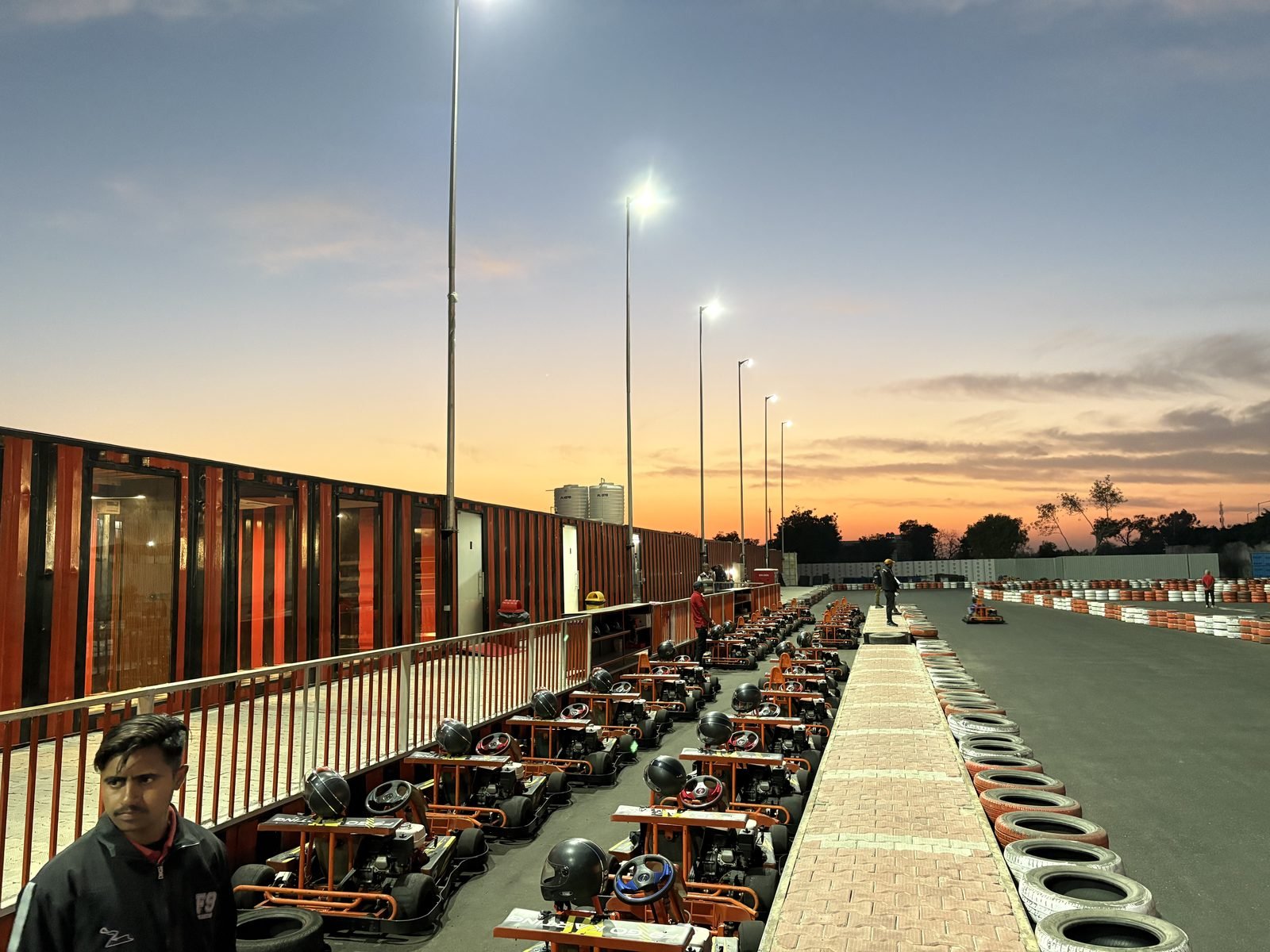
F9 runs outdoor circuits, which means grip is a moving target rather than a fixed condition. That is also why lap times on the same circuit can differ by a second or more between a morning session and an evening one, and why comparing your time across two visits is not always meaningful.
Frequently asked questions
Why does my kart slide more at the start of a session?
Because the tyres are cold and the track has collected dust between sessions. Both reduce grip, and both improve within two or three laps as the rubber heats and the racing line cleans up.
What is the difference between understeer and oversteer?
Understeer is the front sliding and the kart running wide despite the steering input. Oversteer is the rear sliding and the kart rotating more than the driver asked for. Understeer is corrected by reducing steering angle; oversteer by a smooth, gentle correction rather than a sharp lift.
Does a heavier driver have less grip?
A heavier driver has more weight to carry through a corner, which can load the tyres harder in braking but ask more of them in direction changes. Weight matters less than smoothness on a rental kart.
Can driver technique really change lap times?
Yes, and by more than most people expect. Braking earlier, turning in later and getting on the throttle once are worth more on a rental kart than any other single change, because the kart has far more capability than a novice asks of it.
Should I report a slippery patch to the marshal?
Yes, if the kart slides in the same place on every lap regardless of how you drive it. That usually means fluid, sand or damage on the surface, and it is worth reporting at the end of the session.
Where to go next
If you want to work on grip, the guide to braking, lines and exit speed covers the driving side in more detail. The tracks page shows which circuit has the longest lap for practising a consistent line, and Sector 68 at 1,050 metres is the best of them for that. For a first session, the beginner guide covers the basics before you arrive. Questions go through contact, and directions are on Google Maps.