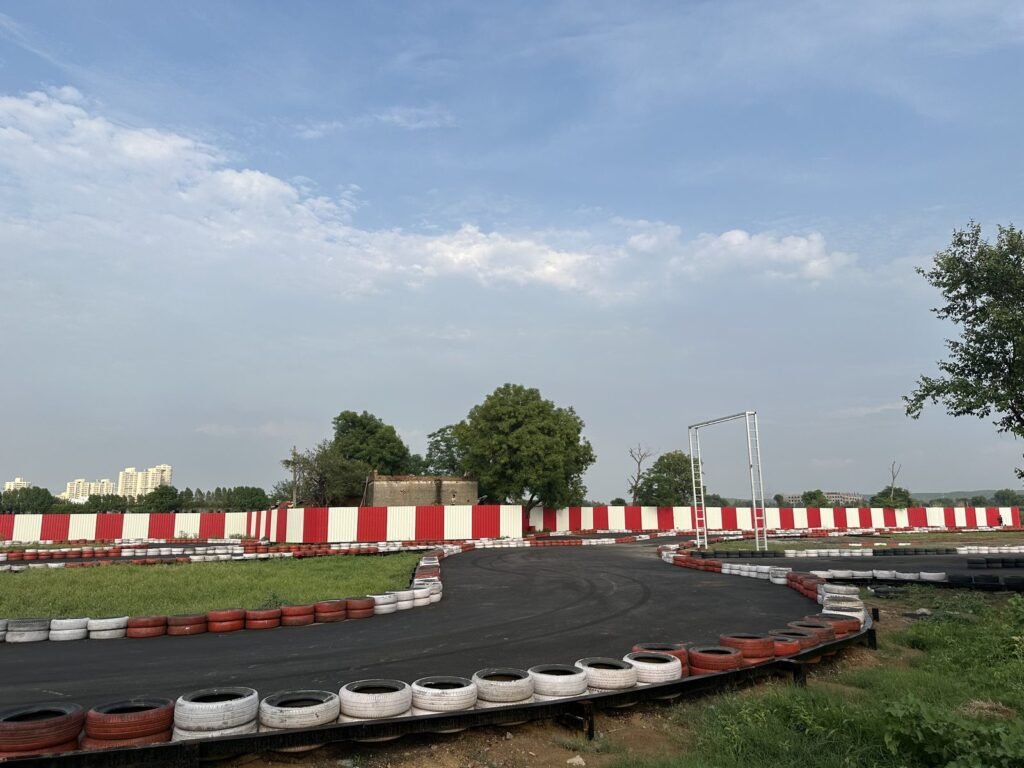
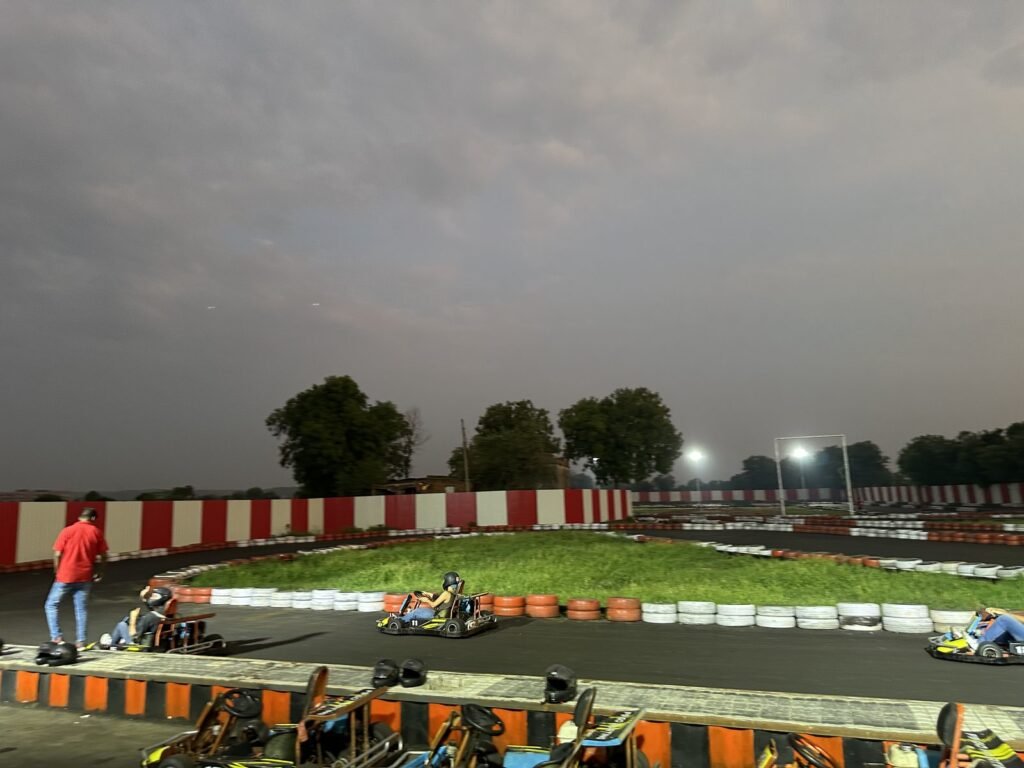
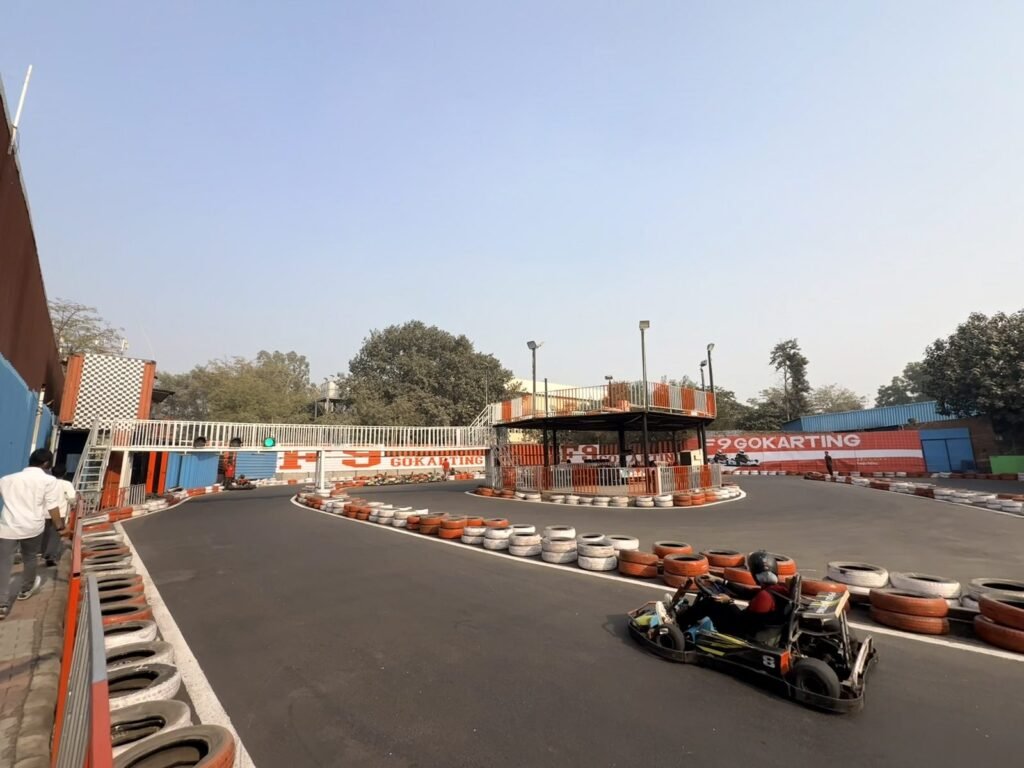
Most offices book a room, a projector and a facilitator, and spend the day listening to the same people who speak in every meeting. An office offsite Gurgaon plan that starts at a karting circuit does the opposite: it puts the quietest person in the team on the same grid as the loudest, and gives everyone something to talk about afterwards that is not work.
That is the whole argument, and it is worth testing against the alternatives before committing a budget to it.
Office offsite Gurgaon: what karting actually delivers
Three things, and only one of them is fun. The first is a shared reference point: inside a week, “the hairpin” becomes shorthand in the office for something everyone experienced together. The second is a visible reordering of the group. Lap times do not care about job titles, and a junior who is quick in a kart earns something a meeting cannot give them. The third is that it is short. A karting session takes an afternoon rather than a day, which means the team is back at their desks rather than out for three days.
The case against the conference room
A conference room has four structural problems for a team event. The seating is fixed, so the same people sit in the same places and speak in the same order. The audience is passive, so half the room is on a laptop within twenty minutes. The hierarchy is visible, so the most senior person sets the tone whether or not they mean to. And the output is a document, which is not a memory.
None of that is a criticism of meetings. It is a reason not to spend an offsite budget on one when the purpose is the team rather than the content.
What changes on a grid
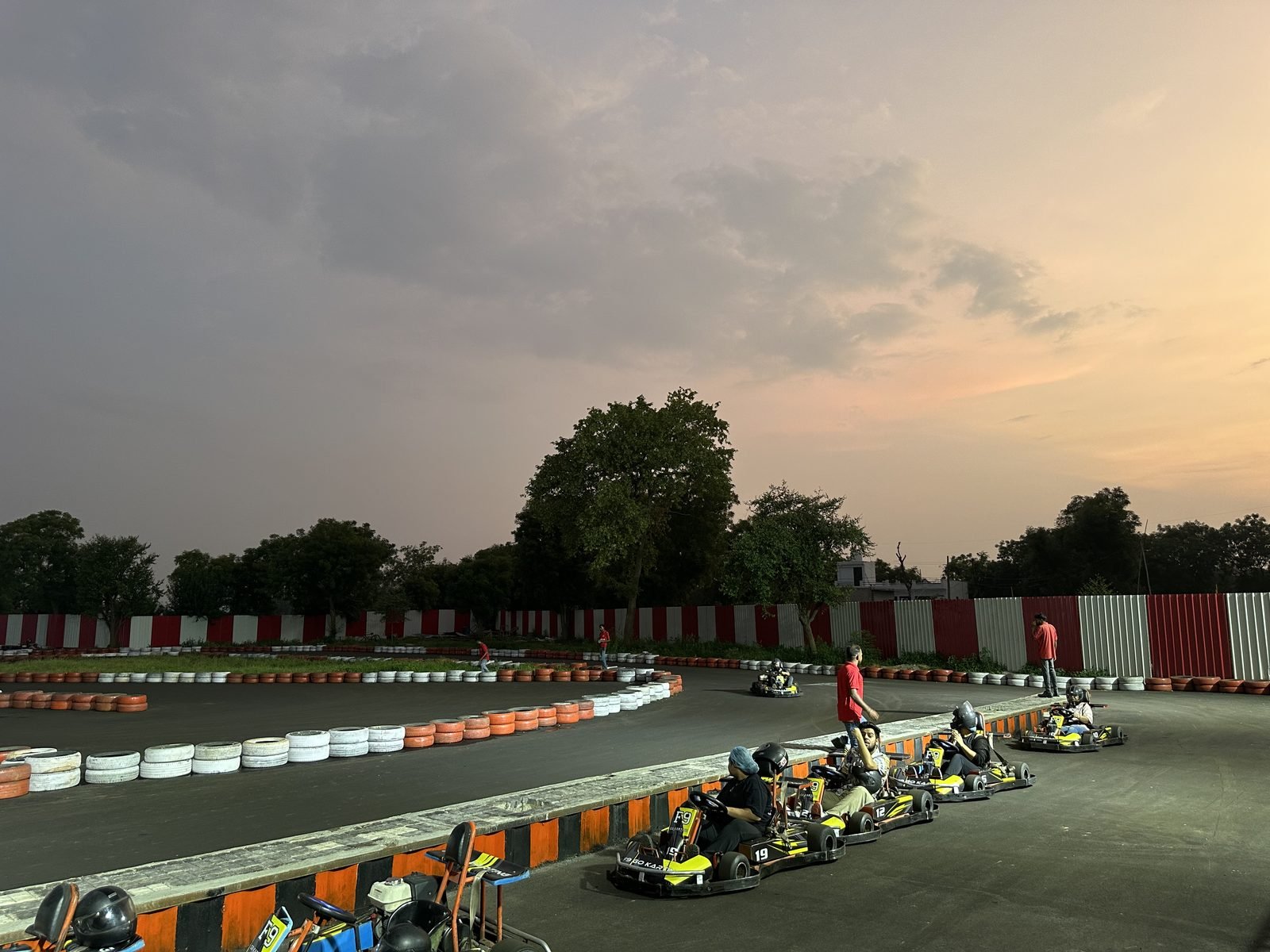
Karting removes all four problems at once. Everyone is in the same equipment, so the only variable is the driver. Everyone has a lap time, so the comparison is objective rather than political. And the session ends with a result everyone can see, which is a far better conversation starter than a slide.
There is a practical detail that matters more than it sounds: a grid of twelve or twenty means the whole team drives at once. Nobody spends the afternoon watching. That single fact is why the larger circuits carry most of the group bookings.
Formats that work for a team
The straightforward version is a thirty-minute group session, which is one round of driving per person and fits neatly into a half-day. The longer version is sixty minutes, run as two blocks with a gap between them, which allows a qualifying round and a final. That second format is what turns an outing into something closer to a competition, and it is only available where the circuit runs hour-long sessions.
A third option suits mixed groups: split into teams of two or three, combine lap times, and score the team rather than the individual. It gives slower drivers a reason to matter and stops the event becoming a contest between two fast people.
What it costs for twelve and twenty
Group pricing is per kart for the whole grid, and every figure includes 18% GST.
- Twelve karts, 30 minutes: ₹21,000 at Sector 68 and Dwarka Expressway; ₹20,500 at Sector 59.
- Twelve karts, 60 minutes: ₹35,500 at all three.
- Twenty karts, 30 minutes: ₹32,000 at Sector 68 and Dwarka Expressway; ₹31,500 at Sector 59.
- Twenty karts, 60 minutes: ₹52,000 at Sector 68 and Dwarka Expressway; ₹51,500 at Sector 59.
Per driver, twelve karts at thirty minutes works out at ₹1,750 and twenty karts at the same length at ₹1,600. The grid size is therefore the discount: filling the last four karts drops the per-head cost by around ₹150, and filling the last eight drops it further.
The honest comparison is with your own last offsite quote. A hotel room, catering and a facilitator for twenty people is rarely a small invoice, and none of it produces a leaderboard.
A half-day agenda that works
The sessions are short, so the day should be built around them rather than the other way round.
- Arrive together. One briefing for the whole group, then helmet fitting.
- First block. Thirty minutes of driving, split into heats if the group is larger than the grid.
- Break. Fifteen minutes for water and the arguments about who was held up.
- Second block. Another thirty minutes, or a final for the fastest drivers.
- Results and food. The leaderboard is read out, then the team eats. Food is arranged with the booking rather than ordered on the day.
Two blocks of thirty minutes is roughly a half-day including travel. One block plus food is closer to three hours.
Logistics worth settling early
Headcount first, because the package is quoted against a kart count and a number that moves changes the price. Non-drivers second: spectators cost nothing, so the team member who does not want to drive can still come and hold the phones.
Travel third. The Gurgaon circuits sit on different sides of the city, and a team coming from Cyber City or Golf Course Road has a shorter run to Sector 59 than to Sector 68. Pick the circuit by where the team actually works, not by which one has the longer lap. The tracks page lists all six with their locations.
Weather fourth. Every F9 circuit is outdoors, so an offsite in July needs a fallback date rather than a hope. Ask what happens if it rains when you book.
Where karting is the wrong choice
Three situations. If the offsite exists to make decisions, book a room, because a karting session has no whiteboard. If the group is larger than the grid at every nearby circuit, the team will spend the afternoon in waves and the event loses its point. And if a significant part of the team cannot or will not drive, the non-drivers become an audience, which is the exact problem the offsite was meant to solve.
For a team of eight to twenty who mostly want to drive, it is hard to beat on cost per hour of actual engagement.
Frequently asked questions
How many people can a karting offsite handle?
Up to twenty driving at once at Sector 59, Sector 68 and Dwarka Expressway. A larger team can be split into two waves, which works but doubles the time on site.
Is karting suitable for a team where nobody has driven before?
Yes. The briefing covers the controls and the flags, and the first laps are driven at a pace the marshals control. Experience is not a prerequisite, and a mixed grid is usually the better event.
How long does the whole outing take?
One thirty-minute block plus briefing, food and travel is about three hours. Two blocks is closer to a half-day.
Can food be included?
Yes. Food is arranged with the booking rather than sold as a fixed extra, so it is discussed when you enquire and priced with the package.
Do spectators pay?
No. Group packages are priced per kart, so only drivers are counted.
Where to go next
The birthday and group events page covers what is included beyond the driving, and the time trial format explains how to run the session as a competition rather than a free-for-all. Send the date, headcount and preferred circuit through contact, or check the tracks page for the nearest circuit. Directions for Sector 59 are on Google Maps.
If the offsite is a year-end celebration rather than a team-building day, the year-end party format covers the heat structure and what forty people cost per head.