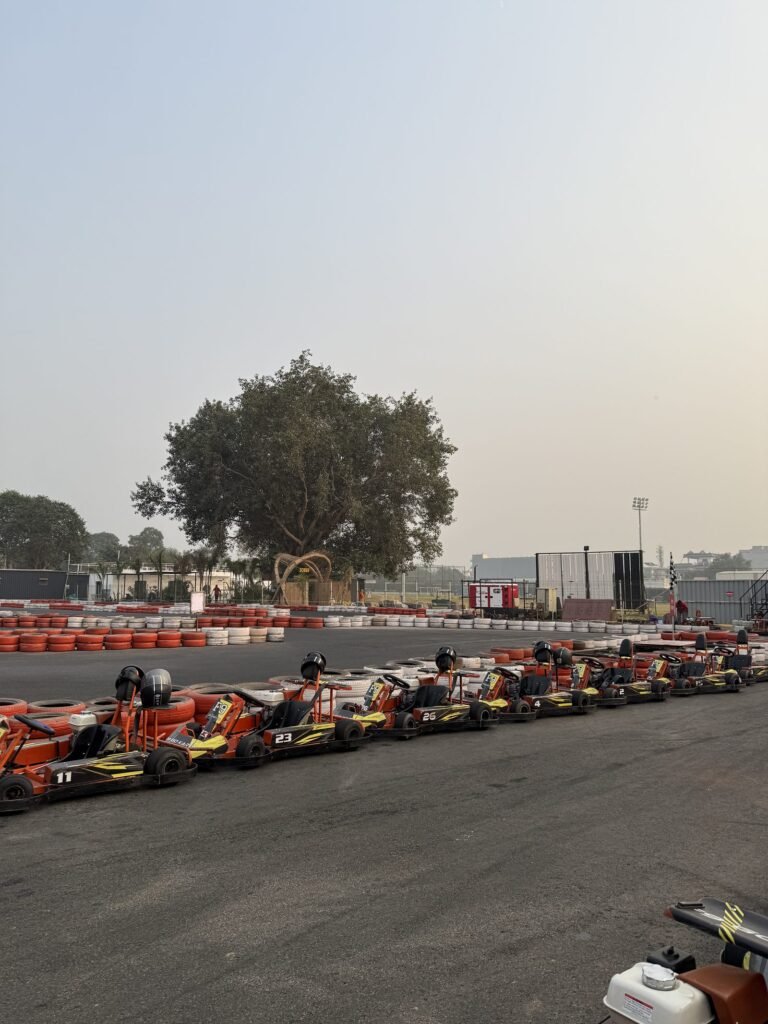
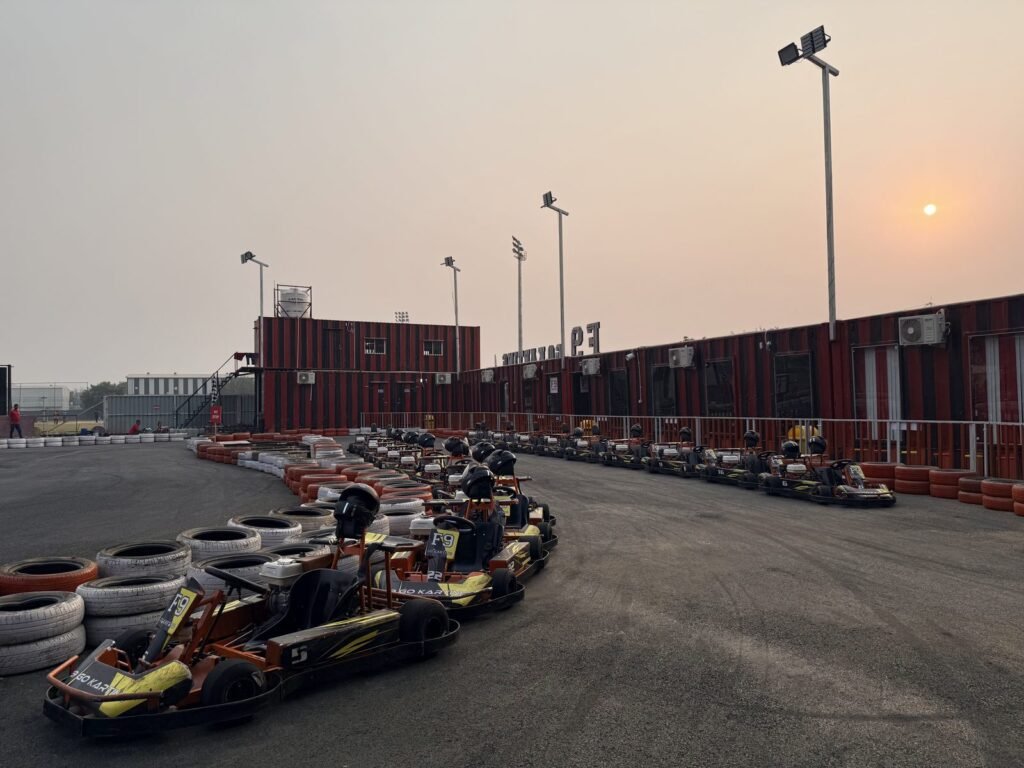
Most corporate karting afternoons fail for one reason: nobody decided the karting team building format before the group arrived. Twenty people turn up, twenty karts go out, everyone drives in a loose train and the results mean nothing. The driving is still fun, but the team building part never happens.
The fix is a time trial. It needs one organiser, a phone, and an order of running agreed in advance. This is the format that works for twenty colleagues, and it costs nothing to set up.
The karting team building format that fits twenty drivers
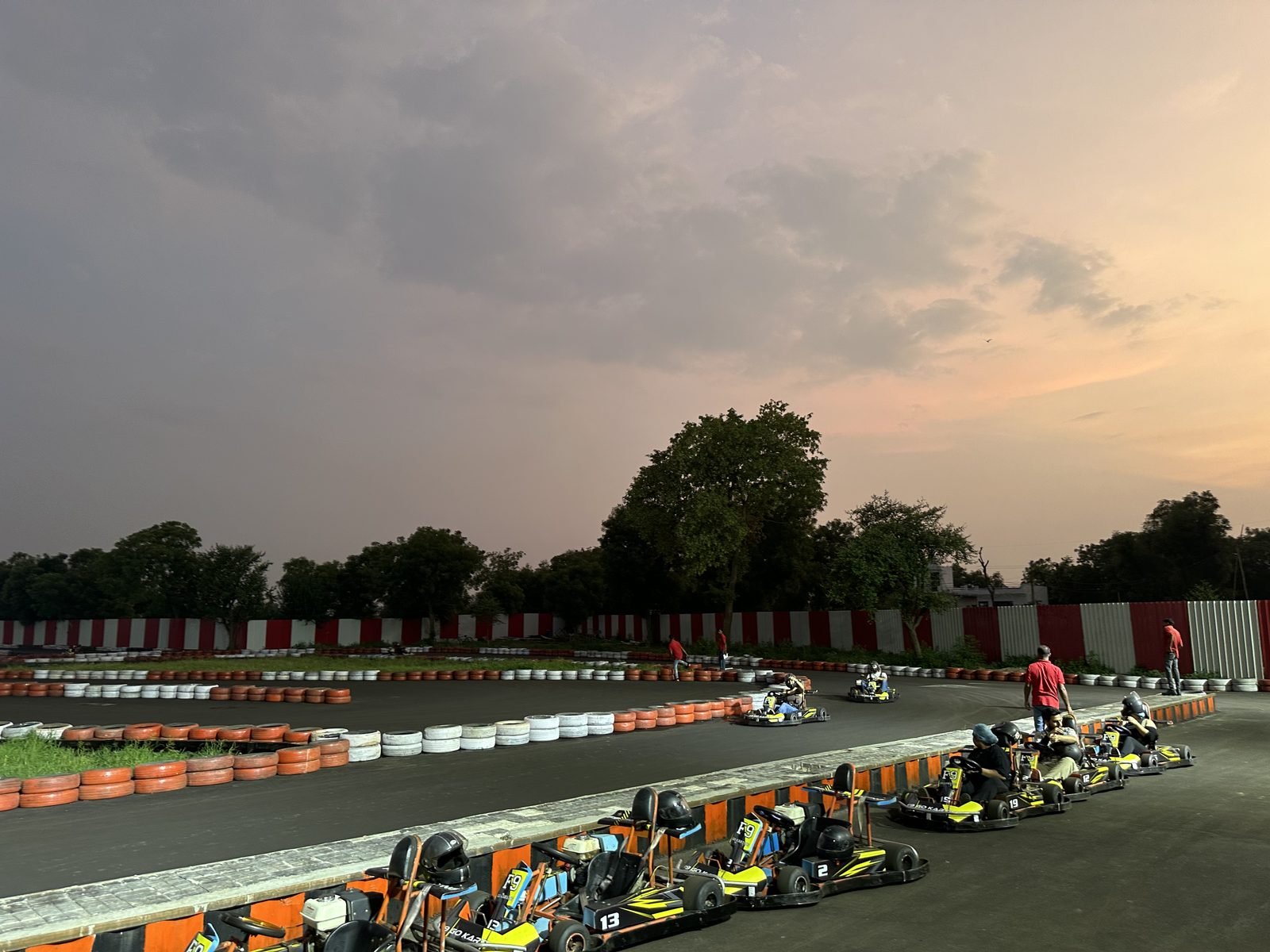
Twenty karts is the largest grid on the network, and putting all twenty on track at once is the wrong choice for a time trial. Traffic decides the result instead of driving. Split the group into four heats of five, run each heat for the same number of laps, and rank everyone on their best lap.
This format has three advantages. Every driver gets clear track. Every driver gets the same distance. And the results are comparable, because the only variable is the driver rather than who was stuck behind whom.
Running it, step by step
First, fix the grid at five karts per heat and write the heat order down, mixing departments so colleagues race people they do not sit next to. Second, give each heat the same session length, because a longer run for the last heat is the fastest way to lose the room.
Then brief the whole group together before the first heat. Everyone hears the same rules, which prevents the second heat from inventing its own.
After each heat, record every driver’s best lap against their name. A phone stopwatch is enough if the venue does not publish times; if it does, use its numbers instead and photograph the screen. Ask when you book whether lap times are recorded, because that single question decides how much work the organiser does.
Finally, publish the standings before the group leaves the venue. A result read out on the spot is team building. A spreadsheet emailed on Monday is admin.
How to score it so the result holds up
Best lap alone rewards the driver who got one clean run. Three numbers make a fairer scoreboard.
- Best lap. The headline. Everyone understands it and it produces the winner.
- Average of the last three laps. This is the consistency number, and it is usually the one that separates the confident drivers from the lucky ones.
- Spread between best and worst. A driver with a tight spread is driving well; a driver with one quick lap and three slow ones got a gap in traffic.
Add two penalties and keep them simple: contact with another kart costs a place, and missing the cone line at a corner costs a second. Announce both in the briefing, apply them without argument, and the group accepts the result.
What twenty karts cost
Booking the whole grid is where the budget conversation happens.
- Sector 59, twenty karts: 30 minutes ₹31,500, 60 minutes ₹51,500. That is ₹1,575 and ₹2,575 a driver.
- Sector 68 or Dwarka Expressway, twenty karts: 30 minutes ₹32,000, 60 minutes ₹52,000, or ₹1,600 and ₹2,600 a driver.
For a time trial, thirty minutes in four heats of five is usually the right buy. Sixty minutes doubles the cost for a group where most drivers will only be on track for a fraction of it. The exception is a group that wants two runs each; then the longer booking is the cheaper way to get there.
Marshalling and safety, in one paragraph
Every driver hears the same three rules before the first heat: no contact, lift when you see the yellow flag, and come in if a marshal signals you. Helmets and the briefing are provided at every circuit, and the briefing is not a formality, because a group that has not been told to lift for a yellow flag will not lift. Give the rules ninety seconds of the group’s attention and the session runs itself.
What about the colleagues who do not want to drive?
Put them to work. A time trial needs a timekeeper, a scorer and someone willing to stand at a corner and watch for contact. Those roles are more useful than a spectator’s phone and they keep the non-drivers inside the event rather than at the edge of it.
If the group is larger than the grid, that is normal. Only drivers need a kart, and the rest watch from the barrier.
Seeding the heats so the fast drivers meet
A random draw is fine for a single heat, but it produces a final nobody can argue about only if the fastest drivers actually race each other. Seed the heats on anything you already know: who has driven before, who cycles to work, who has a simulator at home.
Then run a final. The top five from the four heats go out together, the rest watch. That last heat takes another session, so decide before you book whether the budget carries it, or run the final as part of the same thirty minutes by shortening each heat.
If a final is not affordable, the alternative is a handicap: give the slower drivers a head start of a quarter lap and race the result. It sounds crude but it produces a closer finish, and a close finish is what the group talks about afterwards.
What to send the group the day before
A short message the day before does more for the session than any briefing. Tell everyone the circuit name and a map pin, that the venue is outdoors and all six F9 circuits are, that closed shoes work better than anything open on a pedal, and that the group needs to be together before the first heat because the briefing happens once.
Leave out the itinerary beyond the driving. Nothing generates more friction than an agenda that implies a fixed finish when the session runs on booking order rather than the clock.
Frequently asked questions
How many karts can a time trial run at once?
Twenty at Sector 59, which has the largest grid on the network, and twenty at Sector 68 and Dwarka Expressway. Running five at a time produces cleaner results than filling the grid.
Which circuit is best for a twenty-person time trial?
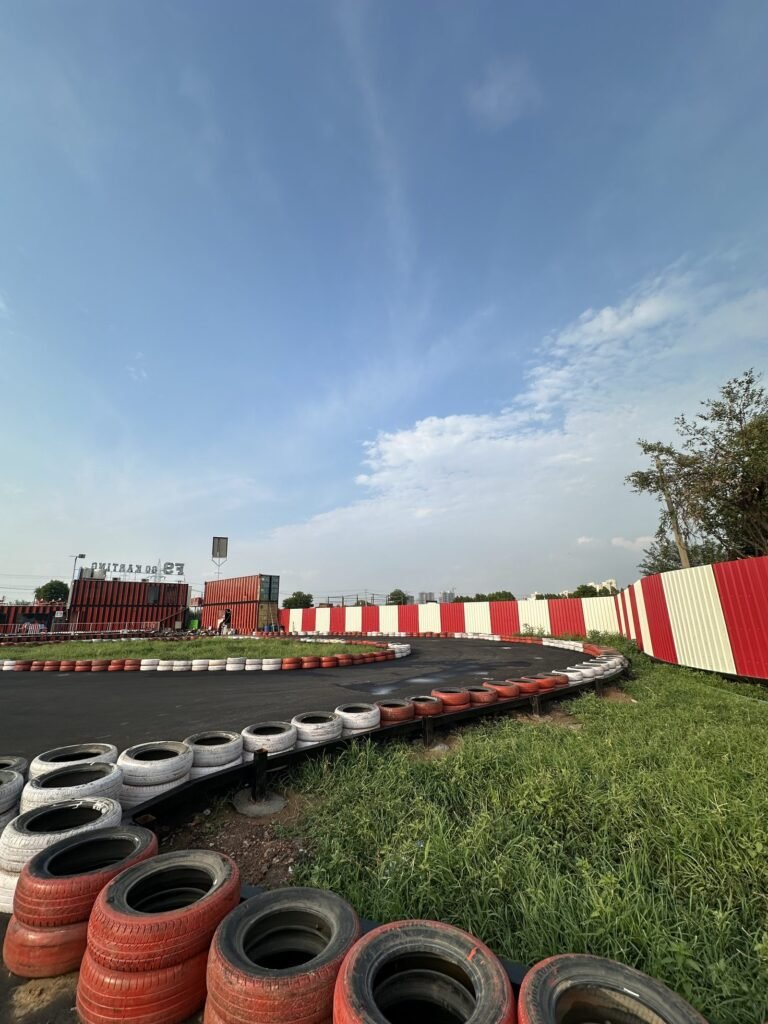
Sector 59, because it takes twenty karts and runs sixty-minute sessions, so the whole group can be handled in one booking. Its 850-metre lap is long enough that a driver has to think about lines rather than just turning.
Do we need to book in advance?
Yes for a grid this size. Twenty karts use most of the track at once, so the booking has to be confirmed rather than assembled on the day. Enquiries go through the contact page.
What if it rains?
All six F9 circuits are outdoors. The venue will advise on conditions and rescheduling on the day, so have a backup date in mind before you book.
Where to go next
Read the Sector 59 group venue guide, compare circuits on the tracks page, see what twenty karts cost in the birthday cost breakdown, or check the Gurgaon price guide for single sessions. For directions, open F9 Go Karting on Google Maps.
Rates are as published on the F9 circuits’ own rate cards, inclusive of 18% GST, checked in October 2026.