The search for go karting vs bowling gurgaon rarely starts as a question about which activity is more fun. It is a question about what your group is doing for the two hours you have booked, and how many of them spend that time watching rather than playing. The arcade belongs in the same conversation, because for some groups it is the right answer and for most it is only the right twenty minutes.
So this is a comparison on the measures that decide an evening: who is active at any given moment, how long the activity actually lasts once the waiting is counted, what a head costs, and what the group has at the end to argue about. Every karting price below comes from the F9 rate card with 18% GST already included.

What each one is actually selling
The three are priced in different units, and the unit explains most of the decision. Karting sells time or laps per driver. Bowling sells a lane and a number of games. The arcade sells credits per play.
- Karting. Cost rises with each driver, but the grid takes up to twenty karts at once, so twenty people race together in the same session.
- Bowling. Cost rises with each lane. Six players share a lane and take turns, so the group spends most of the hour waiting for its turn.
- Arcade. Cost rises with each credit. Every play is one person at one machine, which means the group is as many separate people as there are machines.
That difference is the whole argument. Karting is the only one of the three where the entire group is doing the same thing at the same second and producing one shared result.
The table-stakes comparison
| Factor | Go karting | Bowling | Arcade |
|---|---|---|---|
| Who can take part | Drivers who meet the circuit’s own age and height rules | All ages, bumpers available | All ages |
| Group active at once | Up to 20 karts on track | Six per lane, one bowler at a time | One player per machine |
| Sold in | Laps on weekdays, minutes at weekends | Games per lane | Credits per play |
| Time on the activity | 10 to 18 minutes a heat | About an hour for one game with six players | Two to four minutes a play |
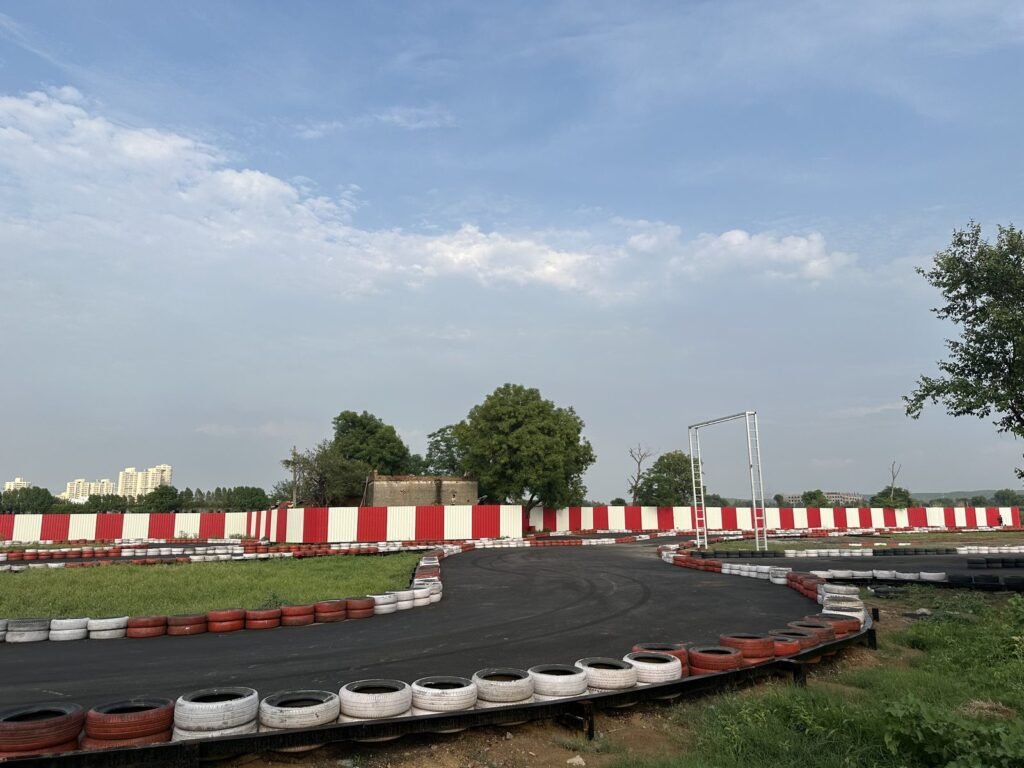
| Weather | All six F9 circuits are outdoors, and a wet track stops play | Indoors | Indoors |
| Result at the end | A lap time for every driver | A score | None |
Go karting vs bowling gurgaon: the money test
Price per head is the number everyone compares and the least useful one. What matters is price per head against minutes of activity, and against how long the outing actually fills. Here is the karting side with real numbers.
| Circuit | Weekday entry | Weekend entry | Driving time |
|---|---|---|---|
| Track 01 — Sector 17/18 | ₹700 for 16 laps | ₹800 for 11 min | About 11 minutes |
| Track 02 — Sector 59 | ₹900 for 10 laps | ₹1,100 for 15 min | About 11 to 15 minutes |
| Track 04 — GT Karnal Road | ₹900 for 12 laps | ₹900 for 12 min | About 12 minutes |
| Track 05 — Sector 68 | ₹900 for 10 laps | ₹1,100 for 12 min | About 10 to 12 minutes |
| Track 06 — Dwarka Expressway | ₹900 for 10 laps | ₹1,100 for 12 min | About 10 to 12 minutes |
Take a group of six. An entry heat each at Sector 17/18 on a weekday is ₹4,200 for about an hour of elapsed time, eleven minutes of which each person spends driving. A second heat doubles the money and roughly doubles the time. That is the honest shape of a karting evening: expensive per minute of driving, but the group is together, and there is a result at the end that outlasts the drive home.
Bowling behaves in the opposite way. The lane rate divided by six can look small per head, and the money is never the constraint. Time is. Six players on one lane at ten frames each is about an hour, and every one of them spends most of that hour not bowling. The arcade is the cheapest of the three per person and the least consequential per rupee: credits vanish quickly, and when they are gone the group moves on.
Where bowling wins
- Mixed ages and non-drivers. Nobody needs a briefing, kit or a lap time to roll a ball.
- Conversation. The slow turn order is the point. A bowling hour is a talking hour with an activity attached.
- Weather. It is indoors, which matters more in Delhi NCR than most people plan for.
- Cost of entry. For a group that wants to spend an hour together and not much money, it is the easiest yes.
- Anyone can join late. A late arrival slots into a frame. On a kart grid, a late arrival misses the heat.
Where the arcade wins, and where it fails
The arcade is the best twenty-minute bookend in the city and the worst thing to build an evening around. It wins when you are early, when someone in the group cannot or will not race, and when the plan has a gap between two bookings. It fails as a main event for one structural reason: it is a solo loop. Every player is on a different machine, nobody is watching the same thing, and no two people are doing anything together. There is no result, so there is nothing to talk about afterwards.
Six people sharing a racing simulator is also not six people racing. Two to four minutes a play means the queue moves slowly and the watching gets boring before the credits run out.
Where karting wins
The case for karting is narrower than its marketing suggests, and stronger than bowling’s on four specific counts.
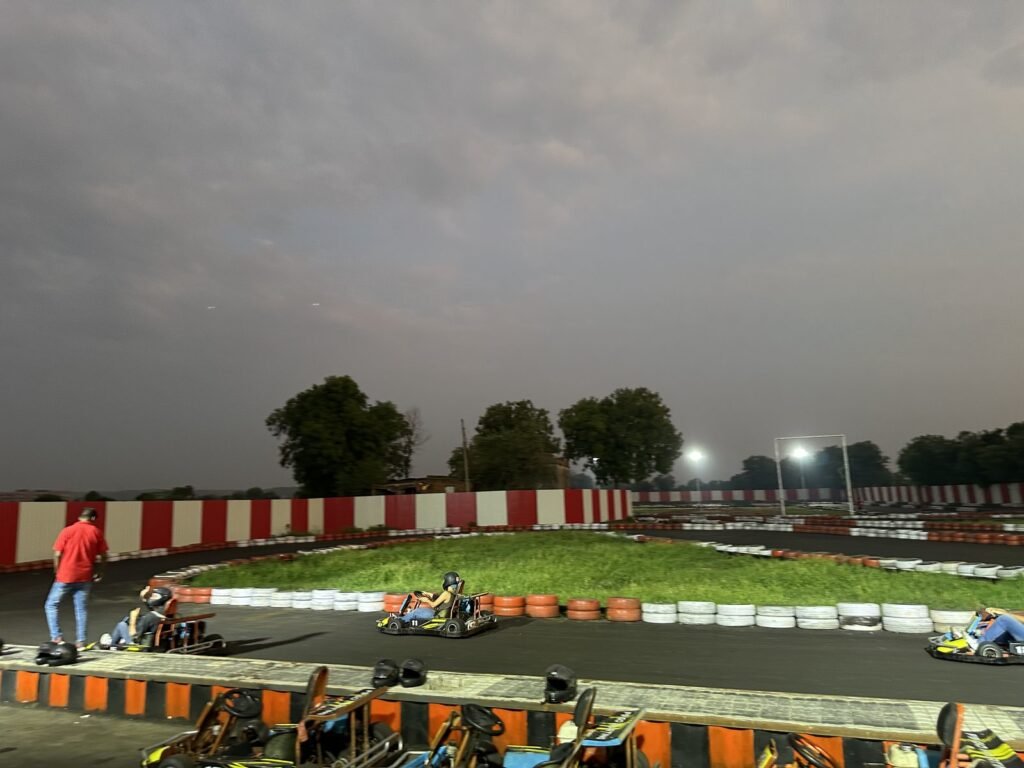
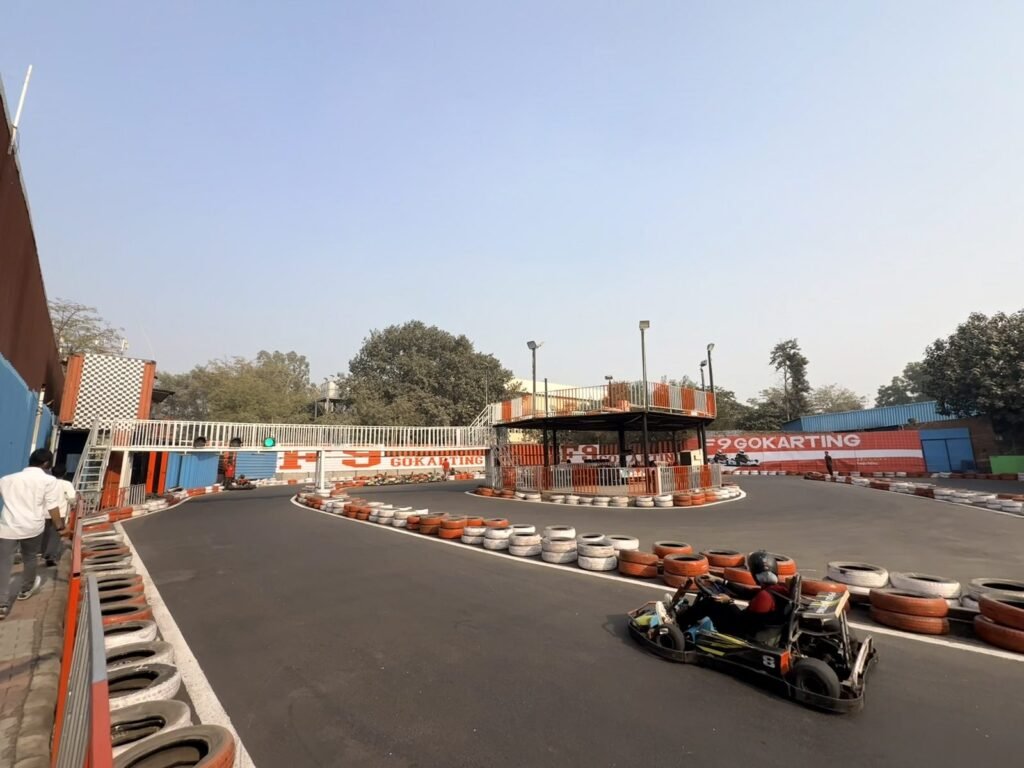
- Everyone is on track at once. The Sector 59 circuit takes up to twenty karts on one grid, so a team of twenty races a team of twenty rather than splitting into lanes.
- Everyone gets a number. Lap times separate a group in a way a bowling score rarely does, because the margins are hundredths rather than strikes.
- The group watches itself. Spectators see the whole lap from the barrier, which is where the shouting, the photographs and the second half of the outing actually happen.
- It scales. Six drivers and twenty drivers run the same format, on the same circuit, with the same result sheet.
The trade-offs are real. All six F9 circuits are outdoors, so a wet track stops the session and rain has to be planned for. A driver who does not meet the circuit’s own rules sits it out. And the cost per minute of driving is the highest of the three, because you are paying for a kart, a marshal and a circuit rather than a lane and a pair of shoes.
Choose by group, not by activity
| Your group | Book this | Why |
|---|---|---|
| 5 or 6 friends, one evening | One heat each, then dinner | Lowest headcount that still feels like a race |
| 8 to 12 friends | Two heats each | A second heat sorts the field and doubles the talking points |
| 12 to 20 colleagues | A full grid at Sector 59 | The only one of the three where everyone is active at once |
| Family with young children | Bowling and arcade first | Check the circuit’s age and height rules before booking karts |
| Mixed fitness or older guests | Bowling | No kit, no neck strain, no waiting for a turn at speed |
| Rain in the forecast | Bowling or arcade | An outdoor circuit cannot run on a wet track |
| Guests arriving at different times | Arcade, then one booked session | The arcade absorbs the gaps the grid cannot |
The two-part evening
For most groups the answer is not one activity or the other. Karting produces the story in 40 to 90 minutes; dinner takes the two hours after it. Book the karts first, because a heat has a fixed start and a table does not, and put dinner after rather than before, since nobody drives well on a full stomach.
If some of the group will not race, do not buy them a seat. Send the drivers to the circuit, meet the rest at the table, and the evening works for both halves. The same logic covers the office version: a group booking of twelve to twenty karts runs as a single session, and the food happens somewhere else afterwards.
Five questions to ask any of the three
- How many of us are active at the same time, not how many of us fit?
- What is the elapsed time from arrival to leaving, not just the activity time?
- What happens if it rains, and is the booking moved or lost?
- Is there a lane minimum, a kart minimum or a per-head minimum?
- What does the group leave with: lap times, a score, or nothing?
Answer those five and the decision usually makes itself. If the answer to the first one is “everyone, at once, with a time at the end”, that is a karting evening. If it is “one at a time, and it does not matter”, bowling will do it for less. The full circuit list, with lengths and rates, is on the tracks page, and the birthday party page covers the version where the group is a guest list. To put a date on it, contact the circuit or get directions to Track 01.