School reunion ideas Gurgaon — most lists begin with a banquet hall, a buffet and a slideshow. That plan works for about an hour. Then twenty adults who have not spoken in twenty years quietly drift back to the four groups they stood in at seventeen, and the evening becomes four separate dinners in one room. A driving session changes the shape of the day: everyone leaves with the same afternoon and the same arguments about who braked too late.
This is the organiser’s version of that plan. It prices twenty drivers at each F9 circuit that can take them, works out the per-head share, and lists what to settle before you send the group message.
Why a kart session holds a twenty-year batch together
At most reunions, three people spend the evening organising and everyone else waits to be placed. A track booking inverts that. The decision is made once, in advance, at a fixed price, and afterwards the organiser gets to be a classmate again rather than the person holding the list. The other half of the argument is simpler: competition gives people something to say to the classmates they had nothing in common with except a classroom.
The catch is that a circuit is not a banquet hall. You cannot add two people at the door without changing the booking, and you cannot seat the quiet ones at a side table. Both problems have numbers attached, so deal with them first.
What twenty drivers cost, in four shapes
Every figure below includes 18% GST and comes from the circuit’s own rate card.
| Shape | Circuit | What each driver gets | Group total | Per head |
|---|---|---|---|---|
| Twenty karts, sixty minutes | Sector 59, 850 m | A full hour, all twenty on one grid | ₹51,500 | ₹2,575 |
| Twenty karts, thirty minutes | Sector 59, 850 m | Thirty minutes together | ₹31,500 | ₹1,575 |
| Four six-kart blocks | Sector 17/18, 450 m | Eighteen minutes, in four rounds of six | ₹26,400 | ₹1,320 |
| Twenty single sessions | Sector 17/18, 450 m | Eighteen minutes each, in rounds | ₹24,000 | ₹1,200 |
The totals read sensibly in that order and reverse once you divide by time on track. The sixty-minute grid is ₹42.92 per person per minute. The thirty-minute grid is ₹52.50. A single eighteen-minute weekend session on the short circuit is ₹66.67. Therefore the option that looks like the extravagance is the cheapest seat time in the network, and the only one where all twenty race each other at the same time.
Why Sector 59 is the circuit for this
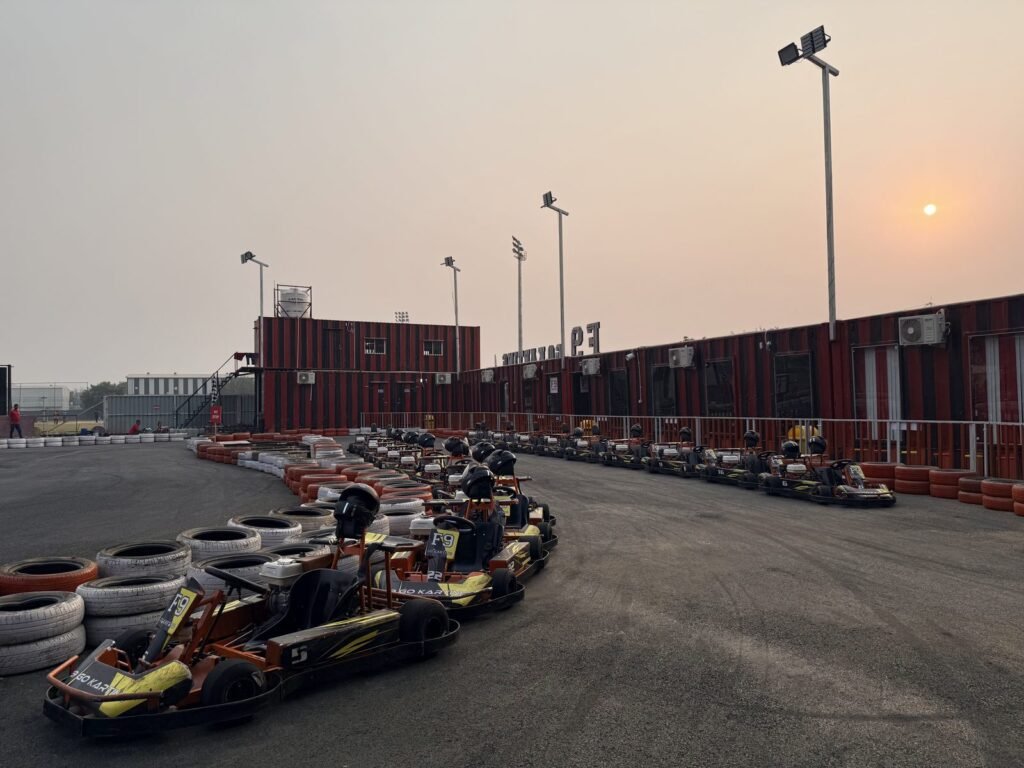
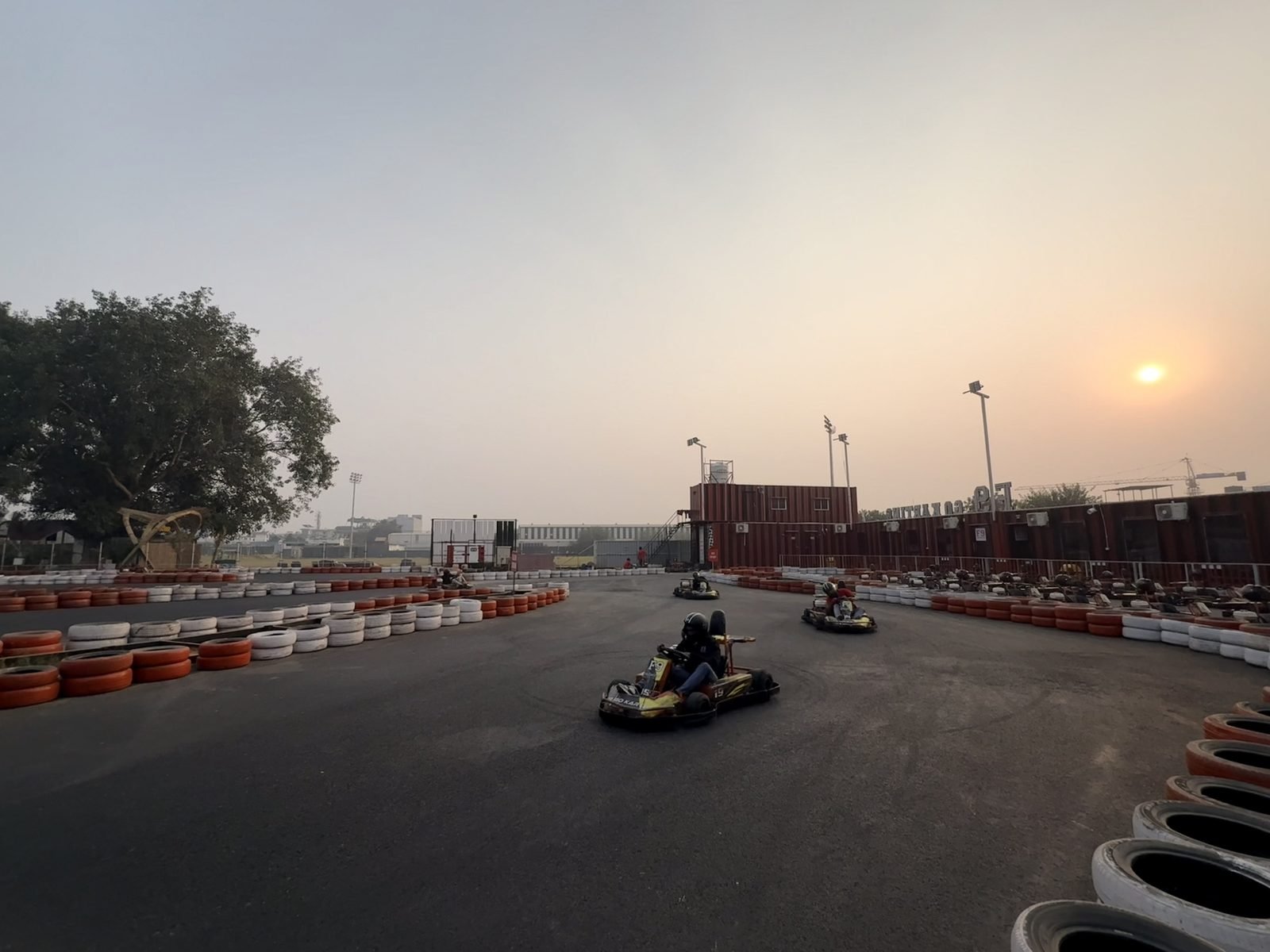
Sector 59 is 850 metres with capacity for twenty karts on the grid at once, and it is the only F9 circuit that sells sixty-minute sessions. That combination is what makes a twenty-person reunion work: one booking, one start, nobody waiting for round three. The Sector 59 circuit page carries the full card, the address and the directions.
The hour also absorbs a problem organisers only see on the day. Twenty people take time to fit helmets, hear the briefing and get seated. In a thirty-minute session a slow start costs a fifth of the drive. In an hour it costs five minutes.
If the group is nearer twelve, or the reunion ends with dinner in the city
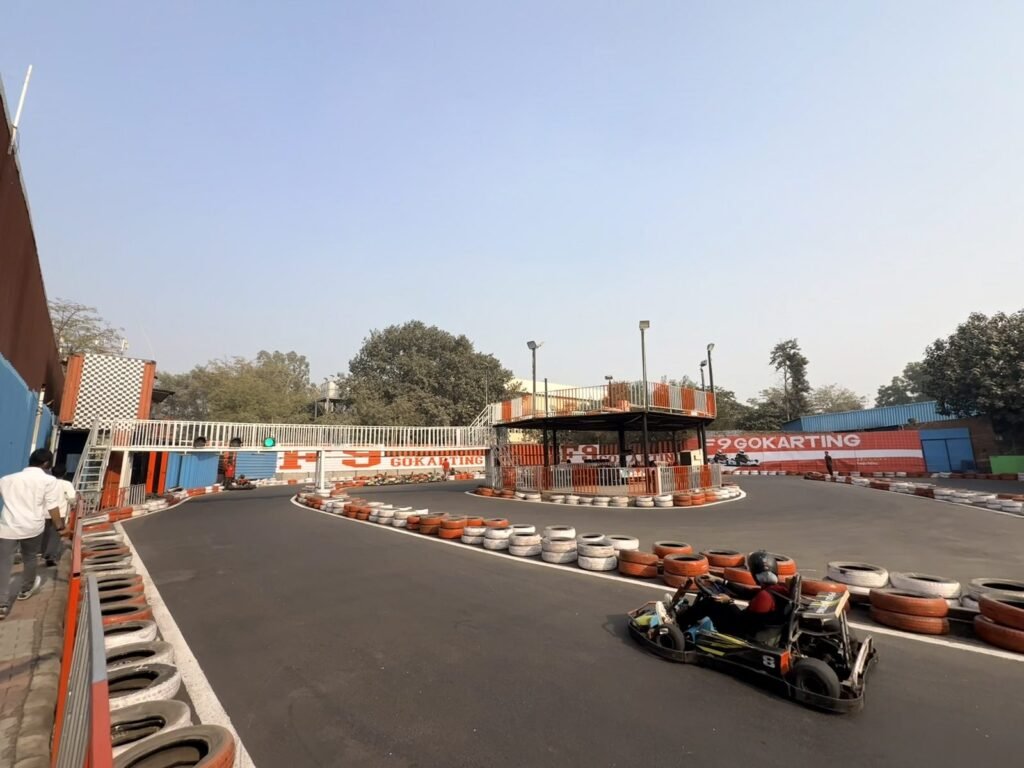
The 450 m circuit at Sector 17/18 Link Road is the cheaper route, and the more central one. Six-kart blocks run at ₹6,600 for eighteen minutes, ₹11,500 for thirty-five and ₹15,000 for fifty, which is ₹1,100, ₹1,917 and ₹2,500 per kart. Four blocks buys twenty-four seats, so twenty drivers fit with four to spare.
What you give up is the single grid. Four blocks means four rounds plus the changeover between them, so this is most of an afternoon rather than an hour. That suits a reunion that starts at lunchtime. It does not suit a batch that wants to arrive at six and be arguing over dinner by eight.
The two questions to answer before you book anything
First, how many karts can the circuit grid at once? That single number decides the venue, and it is the one nobody puts in the group chat. Twenty on one grid is Sector 59. A short circuit sold in six-kart blocks will run your twenty as four rounds.
Second, count the ones who will not drive. Every batch has three or four: a bad back, a genuine fear of it, a classmate who came for the conversation. They should not be an afterthought on the day. Check that there is somewhere to sit and watch, and put one of them in charge of the photographs, which is a real job and a far better one than waiting in the car park.
The reunion ideas that still belong in the day
A track session has natural gaps: sign-in, helmet fitting, the wait between rounds. Fill them with the nostalgia the group actually came for.
- Name tags with senior-year photographs. After twenty years, faces are the one thing the group needs help with, and it starts conversations in the first five minutes.
- A then-and-now photo board. One school photograph and one recent one per classmate, printed and taped to a table. A table is enough; nobody needs a decorated wall.
- A playlist from your graduating year, played in the car park before and after the session rather than during it.
- The group photograph before the helmets go on. Helmet hair is funny for a minute and then it is the only picture you have.
- Class awards after the driving, not before. “Still brakes last” lands better once everyone has watched it happen.
- Yearbooks on the same table as the name tags. They do the work that a slideshow cannot: people stand around them in small groups.
What to settle before you call
- A firm headcount with a deadline. Twenty is one twenty-kart grid or four six-kart blocks; nineteen is a different booking. Pick a date and stick to it.
- One payer. Collect before the day, per head, or the organiser spends six weeks chasing seventeen people.
- Phone rather than book online once you are above six karts. Group capacity is arranged on the call, and every circuit number is on the contact page.
- Ask what happens if it rains. All six F9 circuits are outdoor, and a reunion date is harder to move than a normal booking.
- Ask whose name goes on the invoice if one classmate is paying first and collecting later.
School reunion ideas Gurgaon: the eight-week plan
| When | What |
|---|---|
| Eight weeks out | Agree the date and the circuit, and confirm the booking so it is real. Everything else follows from a fixed date. |
| Six weeks | Set the headcount deadline and the per-head share. Post the rate card so nobody has to ask what it costs. |
| Four weeks | Confirm the number with the circuit, and ask the batch for the photographs for the then-and-now board. |
| One week | One message with the address, the drive time from the two or three parts of the city people live in, and what to wear: closed shoes, trousers, no loose scarves. |
| On the day | Arrive early enough that helmets and briefing are not rushed. Photographs before helmets. Awards after the last round. |
Questions organisers ask
Can twenty of us race at once?
At Sector 59, yes: twenty karts on the 850 m grid. At the other circuits, no. A short circuit runs your group in rounds of six, which is why that package is sold as six karts rather than six tickets.
Half the batch has never driven. Is that a problem?
No. Karting at these circuits needs no licence and no experience, and helmets and a briefing are part of every session. Twenty-year reunions are not the group that arrives with racing history.
What about the ones who will not drive at all?
Give them a job and a seat. Photographs, name tags, the playlist and the yearbooks are all real work, and a spectator who is holding something stays longer than one who is watching from a barrier.
How should we split the bill?
Per head, from the table above. The sixty-minute twenty-kart grid is ₹2,575 each. The four-block version on the short circuit works out at ₹1,320 each, with four spare seats that regularly get filled by the classmates who said they were only coming for dinner.
Where to send the group next
Book the grid first and build the nostalgia around it. The six circuits and their lengths are compared on the tracks page, the group booking route is set out in the group booking guide, and anything above twenty is covered in the large group plan. Directions to the Sector 59 gate are on Google Maps.